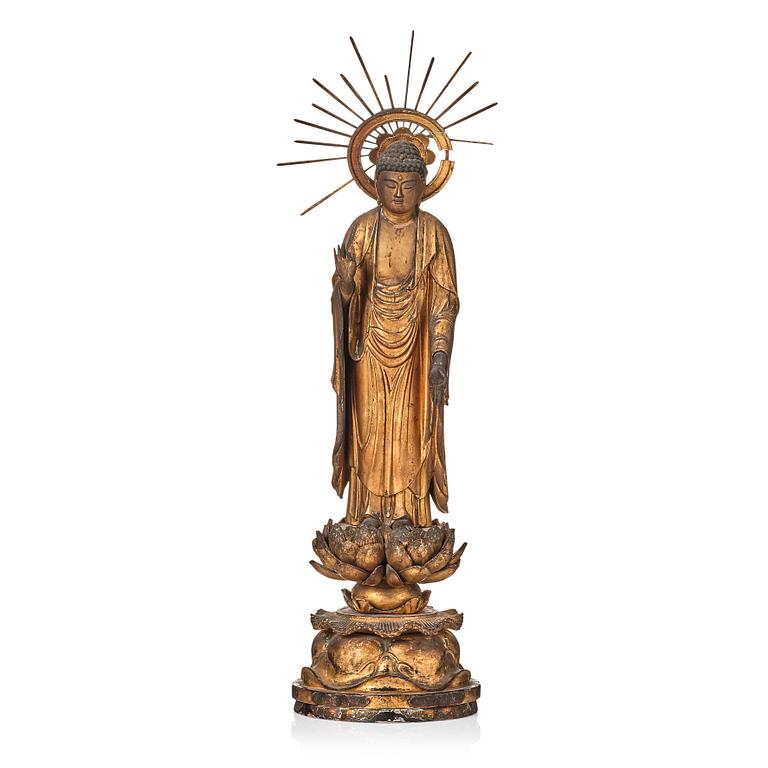
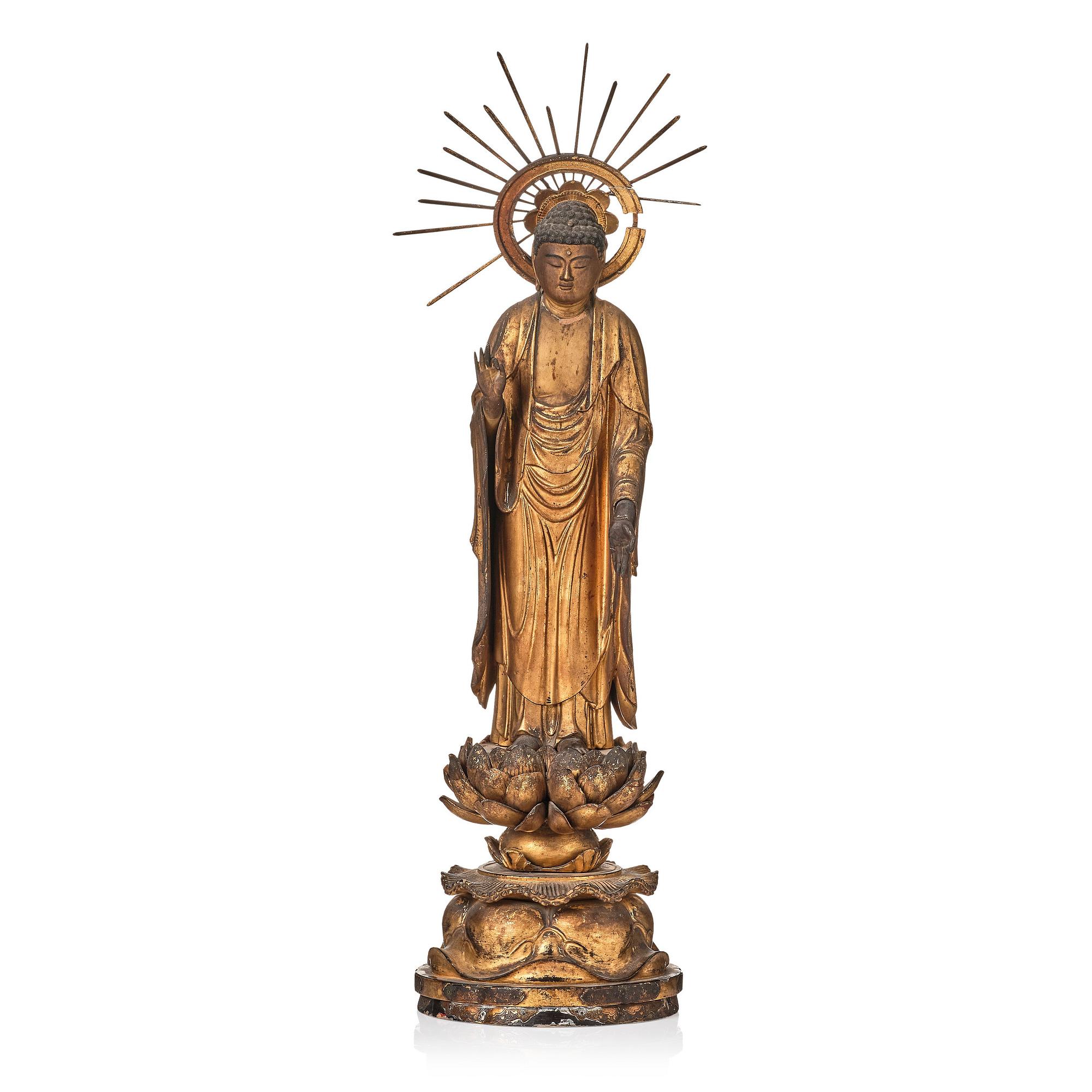
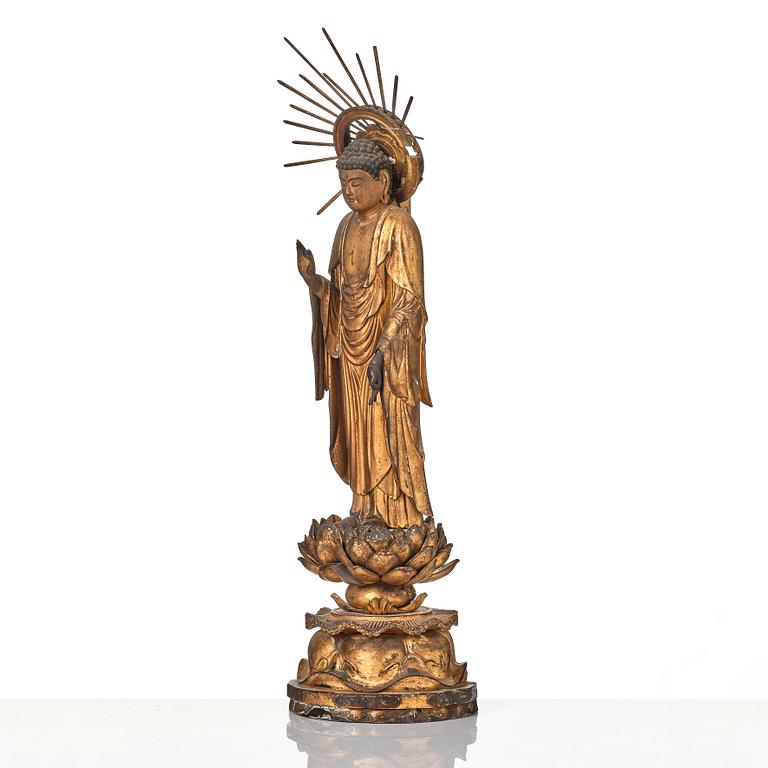
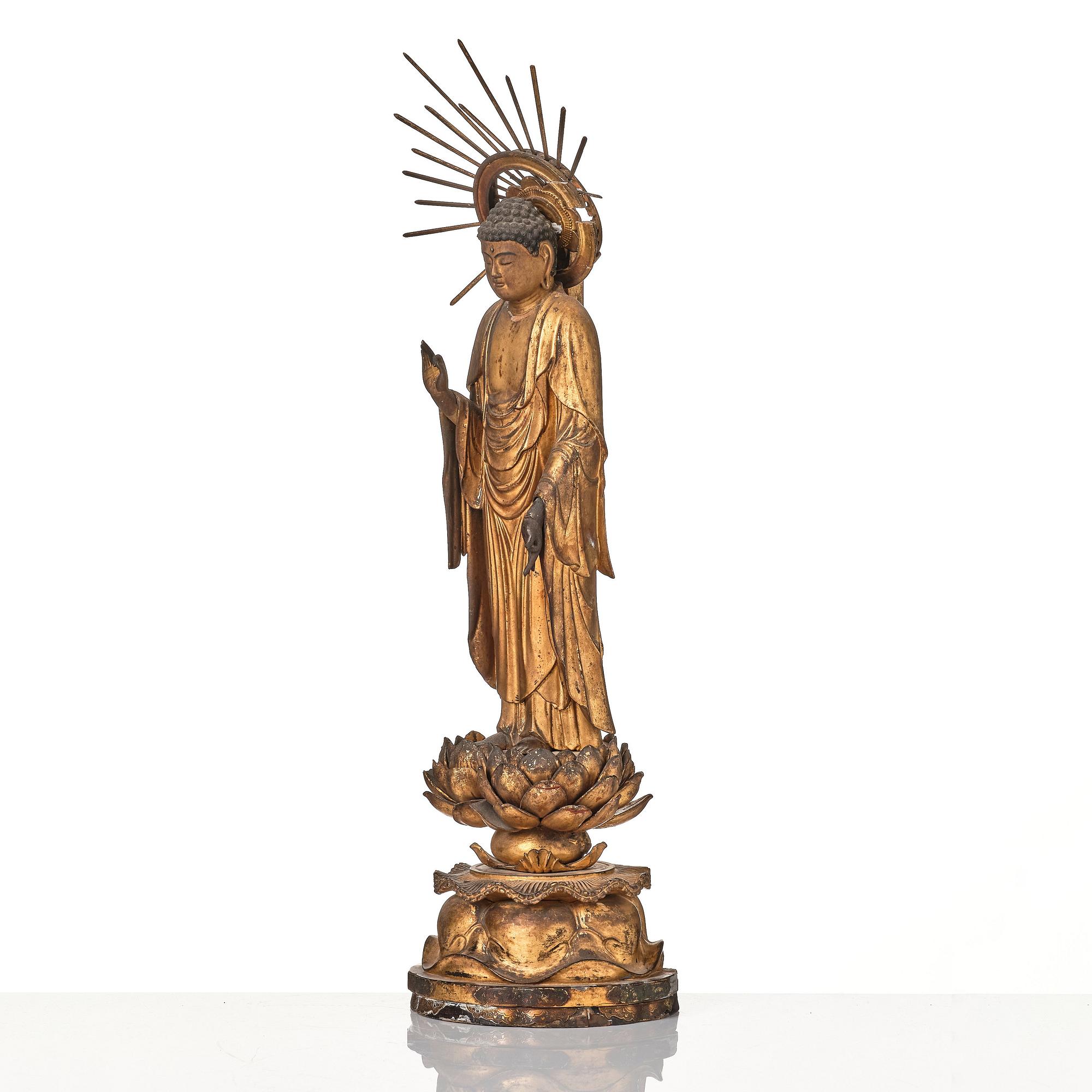
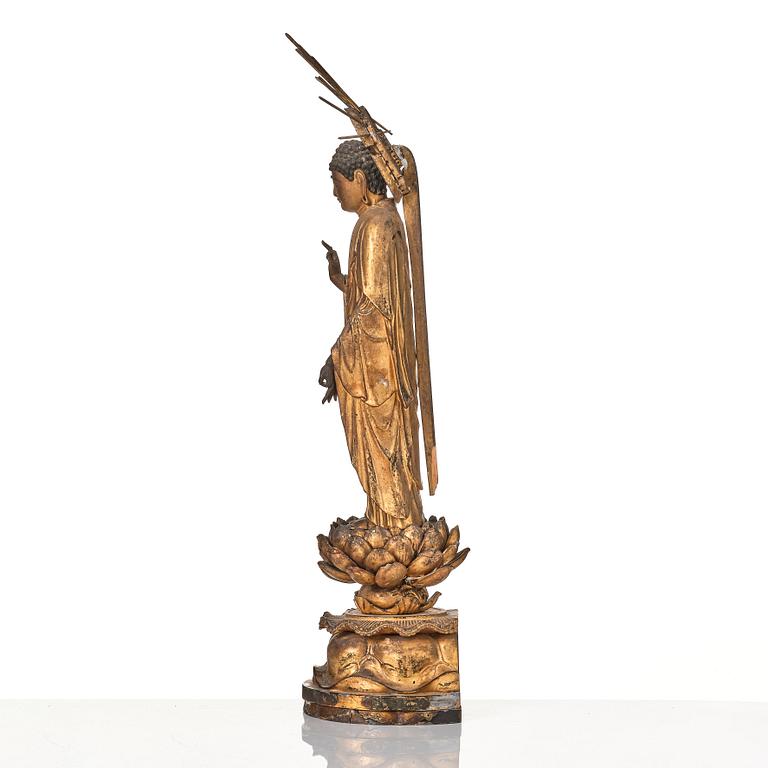
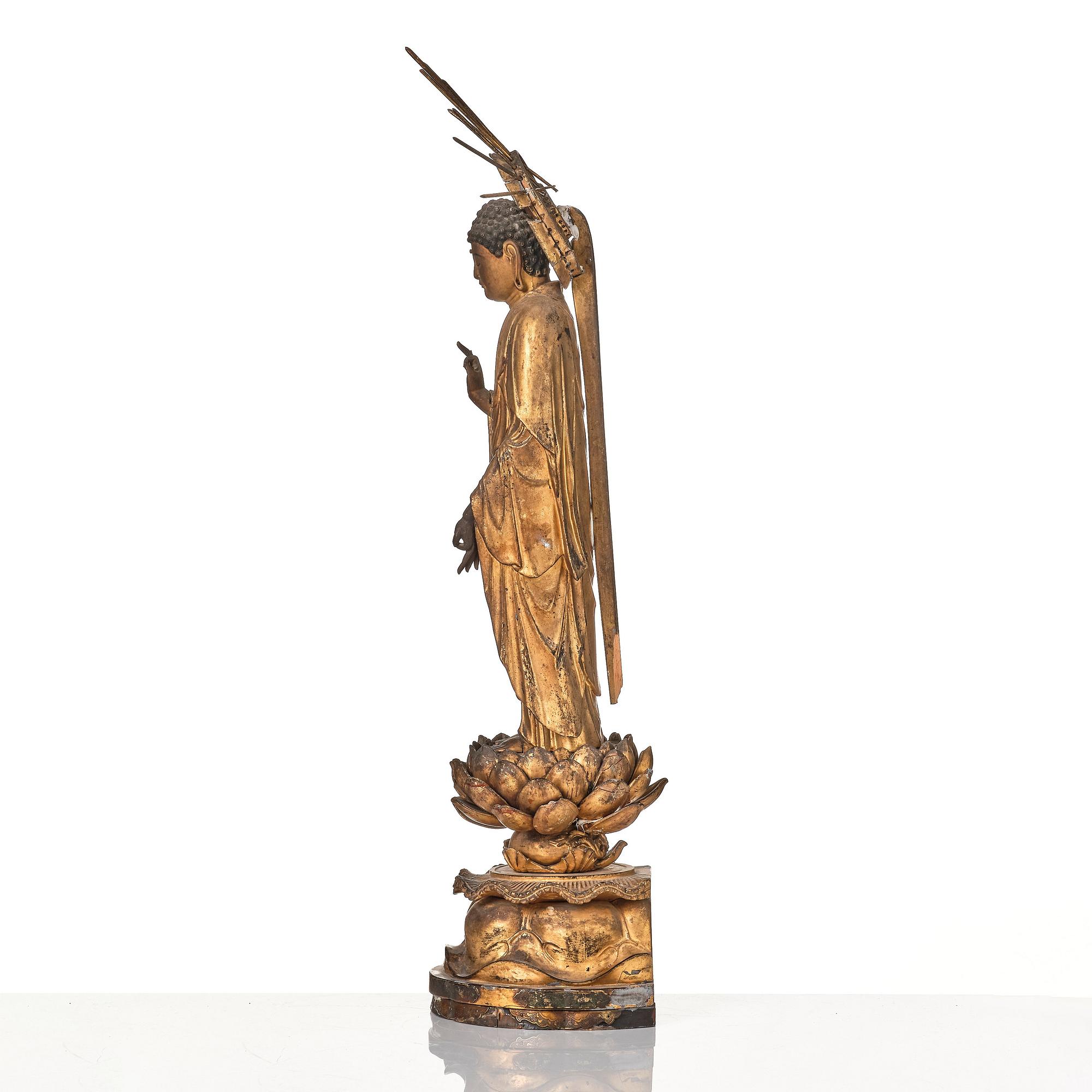
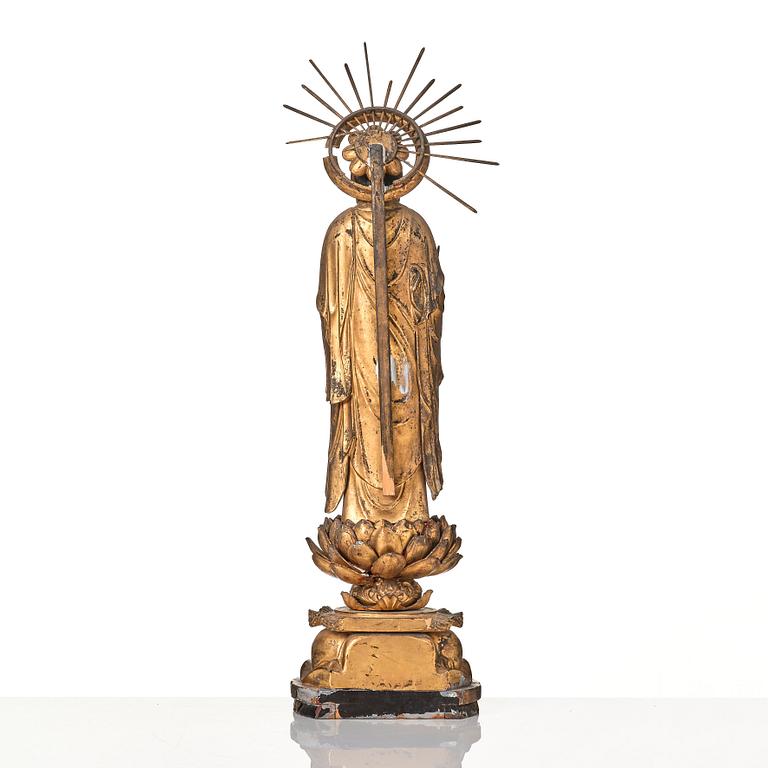
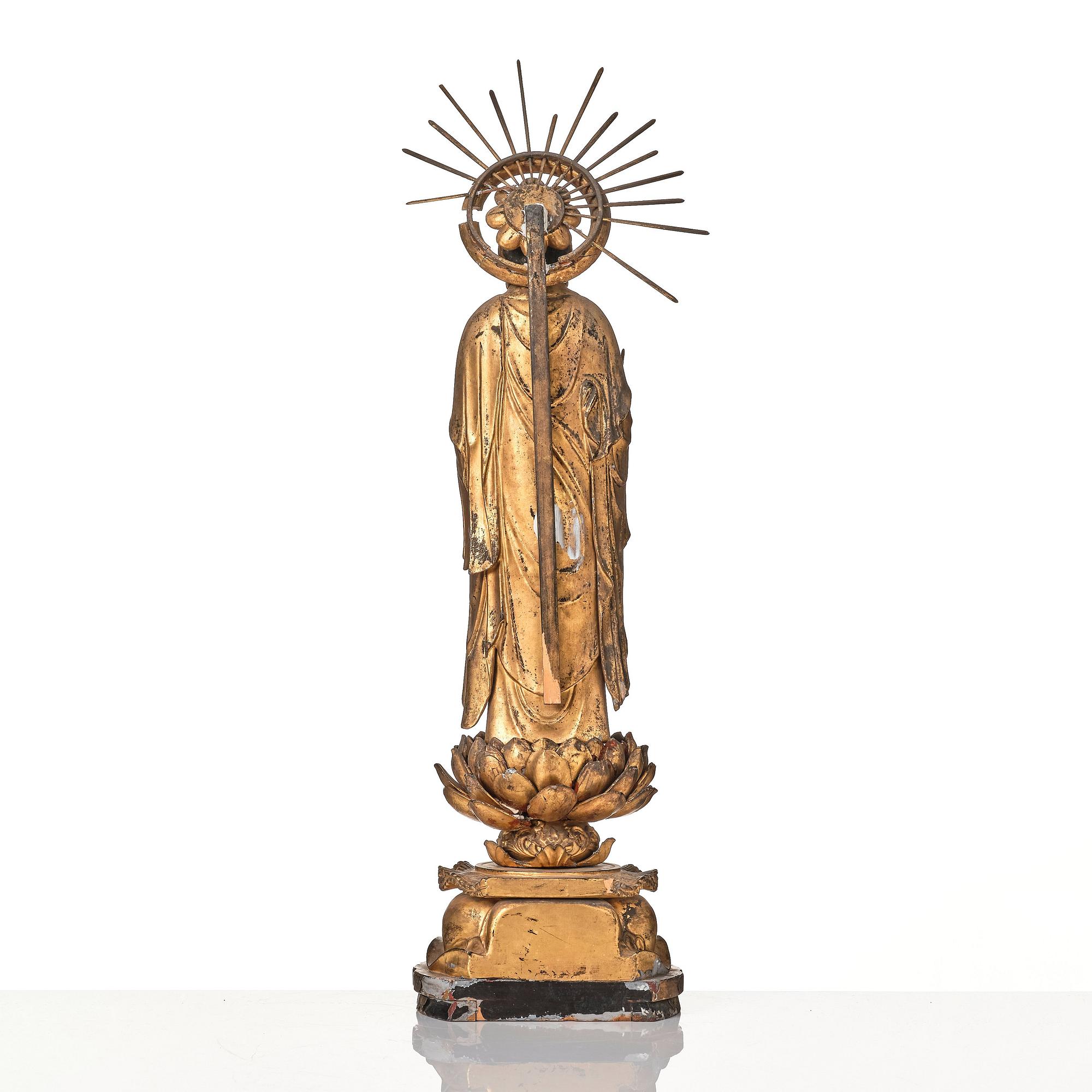
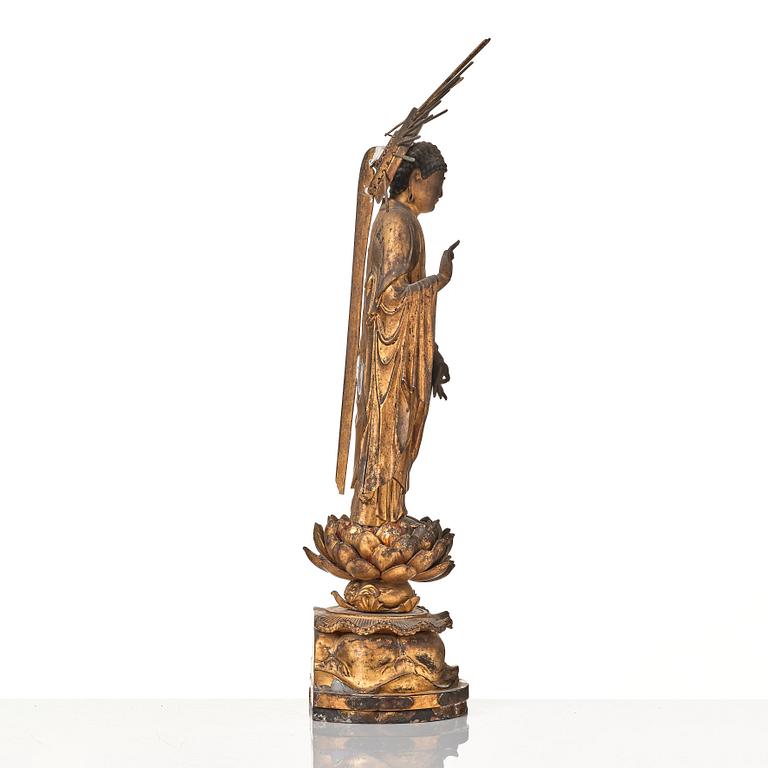
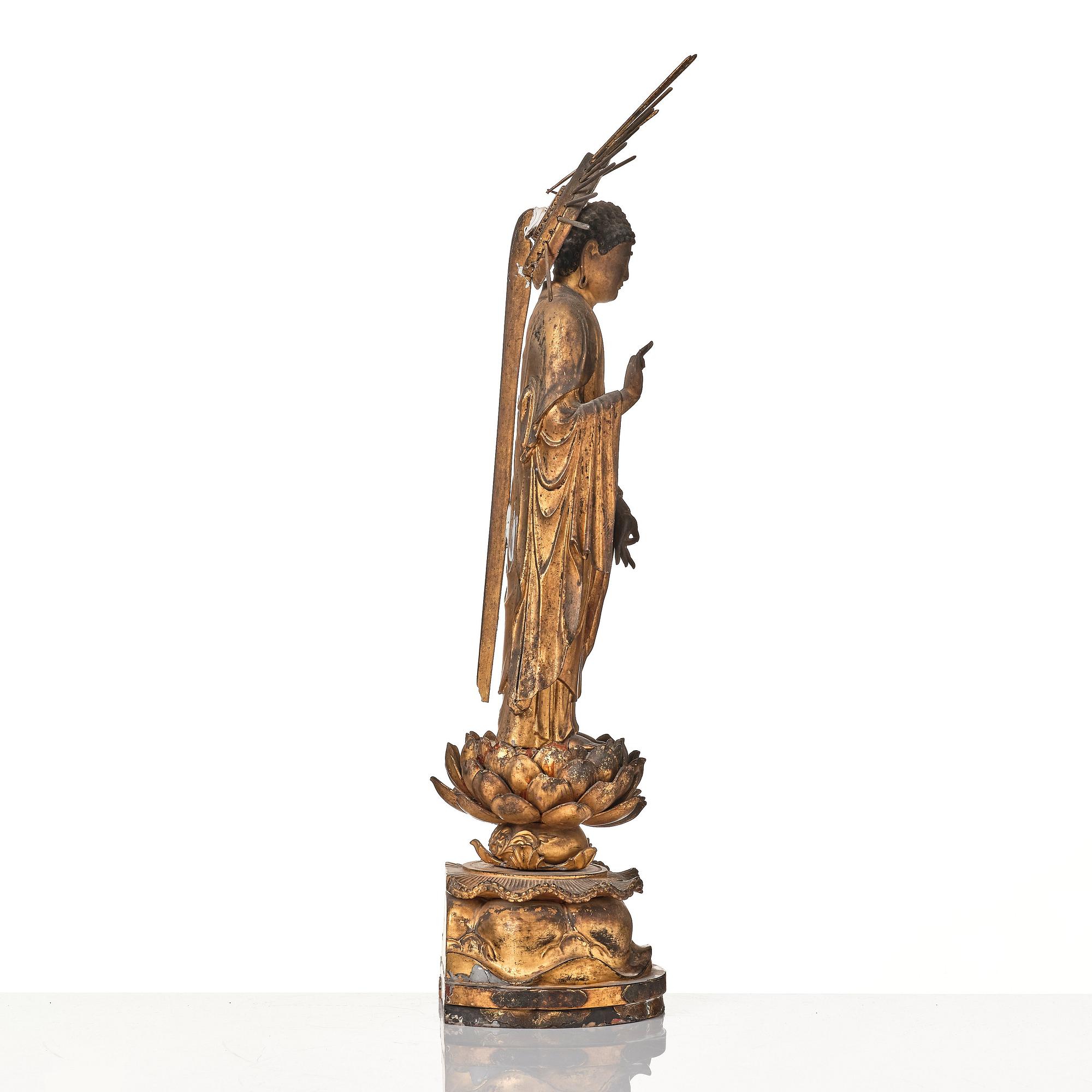
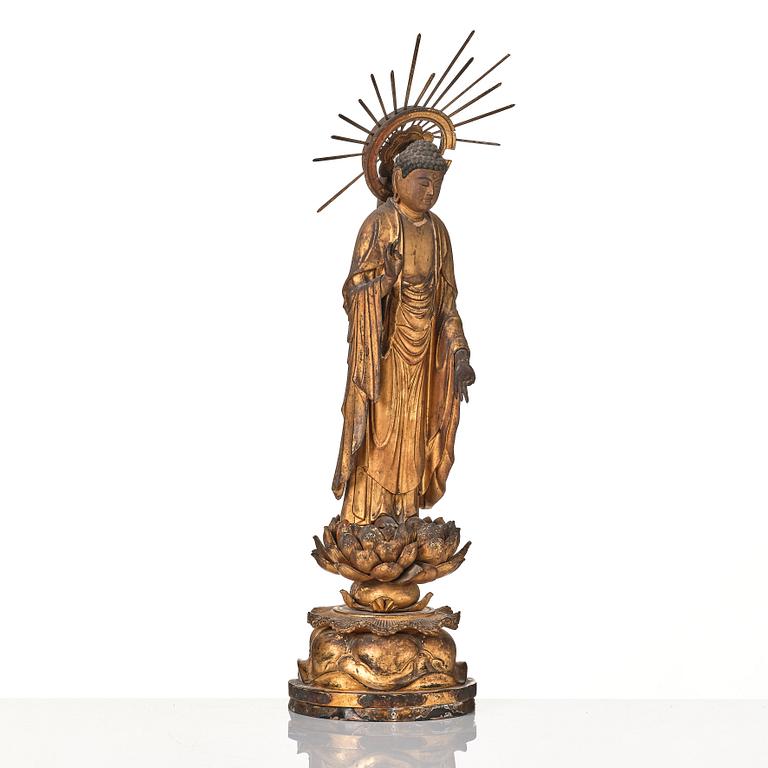
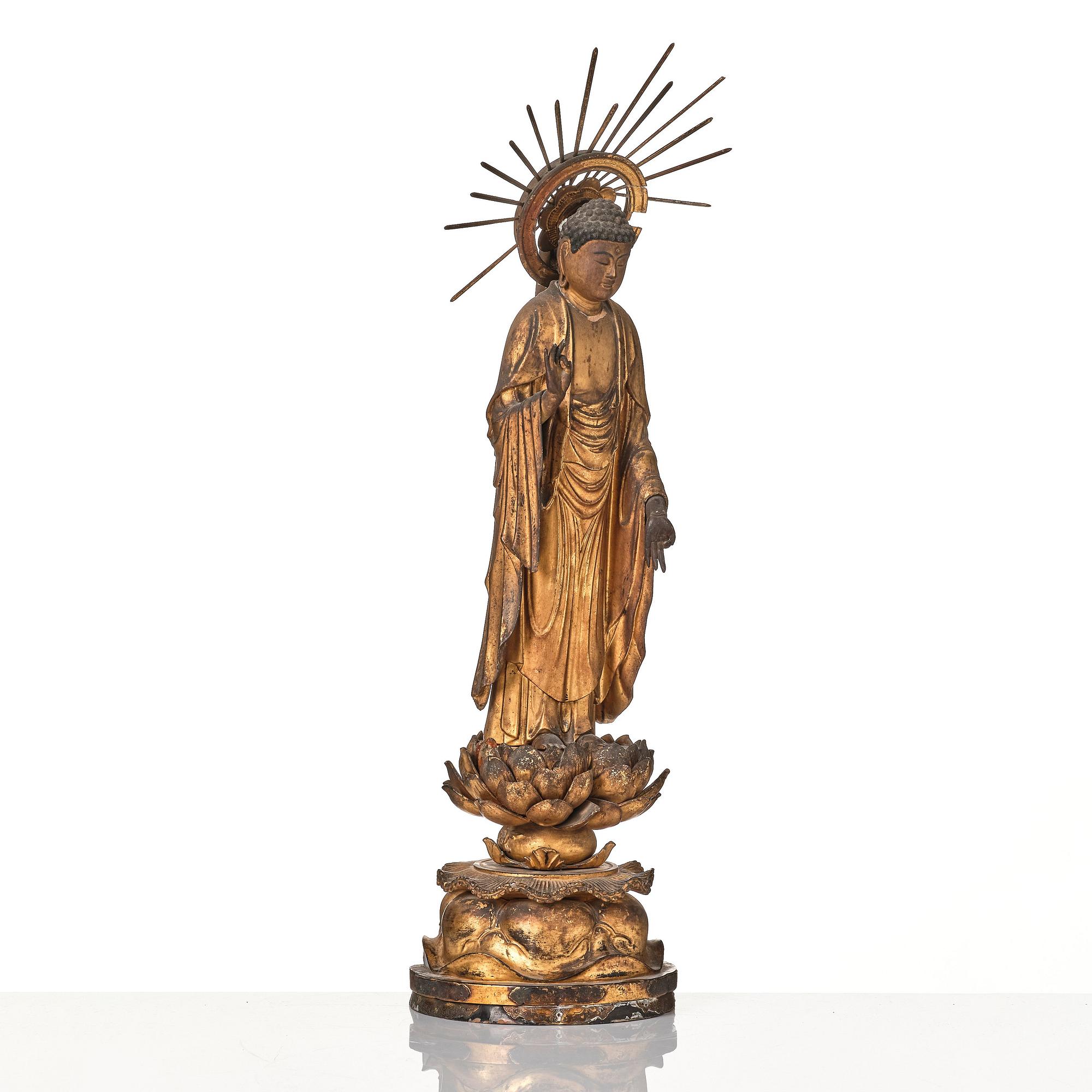
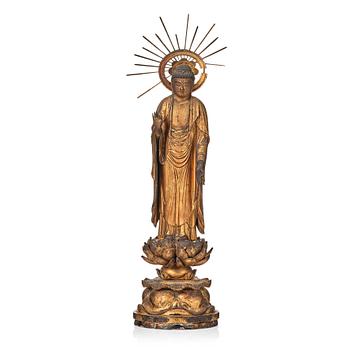
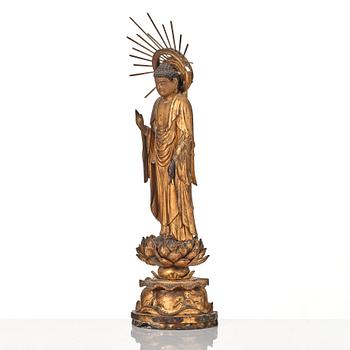
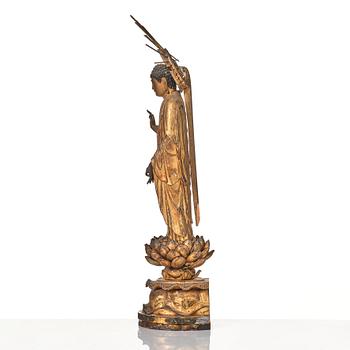
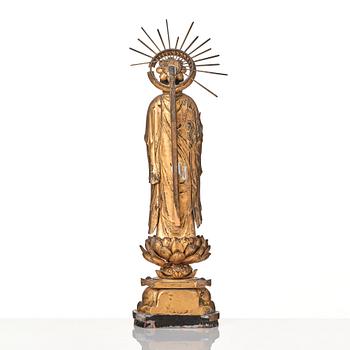
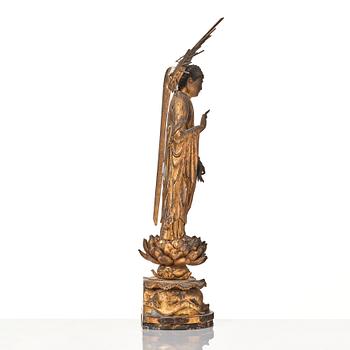
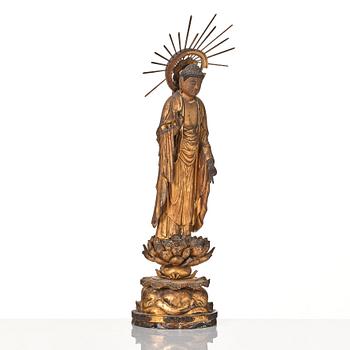
Tillverkad i delar, stående stolt på en lotusbas, med en rund mandorla med strålar. Buddhan avbildad stående, klädd i en draperad dhoti, med den högra handen höjd i en välkomnande och lugnande gest, och en vänstra sänkt i en välsignande gest. Höjd 63,5 cm.
Skador, lagningar, lös del vid sockel.
Proveniens
From the Collection of Elsa (1910-2003) and Cyril Holm (1894 – 1960), Stockholm. The couple shared a passion for art, Chinese antiques and philosophy, they were active in creating their collection and decorating their villa in Danderyd up until 1960. Thence by descent.
Utställningar
Compare an amida buddha sold with Christies, 10 sept - 1 Oct. 2020 | Auction sale 19805.
Crafted Landscapes: The Ankarcrona Collection of Japanese Lacquer and Asian Works of Art. Lot 1.
Övrig information
The sculpture represents Amitabha, known in Japanese as Amida Nyorai, Buddha of Infinite Light. The Pure Land (Jodo) tradition in Japan emphasises the salvific powers of Amida; incantation of the Buddha’s name can invite divine intercession and devotion in life can insure rebirth in Amida’s Western Paradise. By the early eleventh century, it was increasingly believed that only the compassion of Amida could override the cycle of rise, decline and fall––the concept of mappo, meaning the end of the Law that would devolve into ten millennia of moral degradation and strife. By Japanese calculation, this would coincide with the year 1052.
För konditionsrapport kontakta specialist