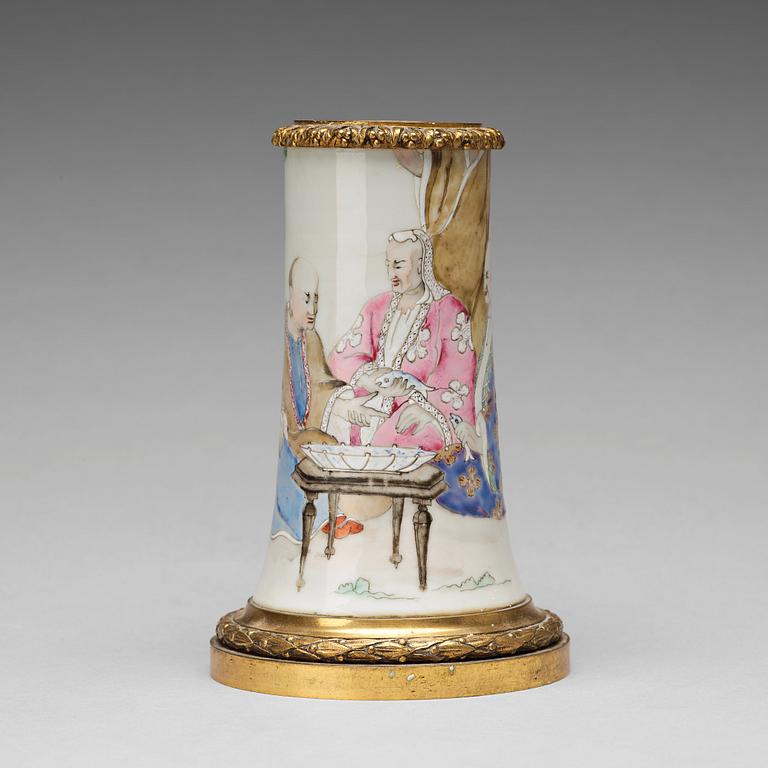
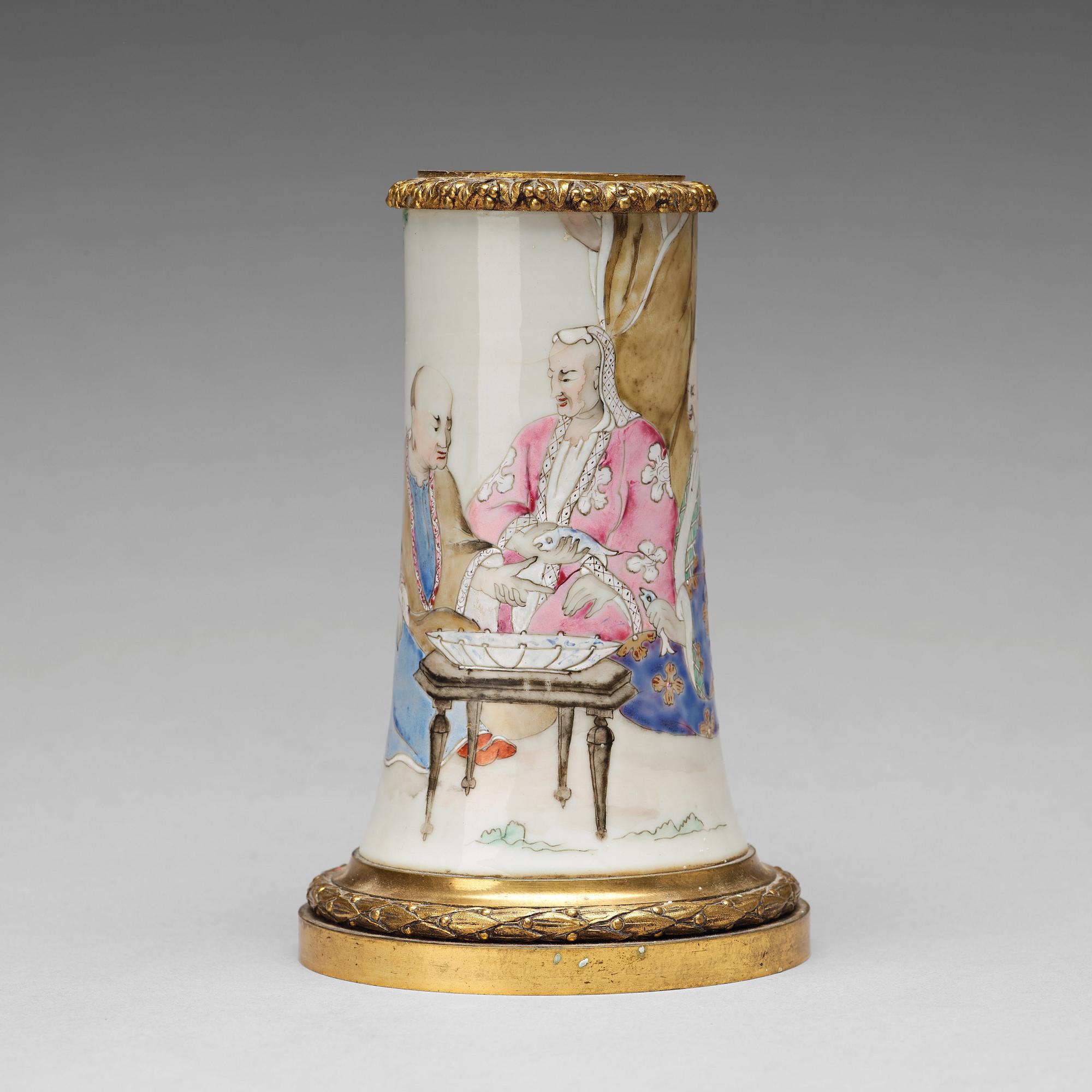
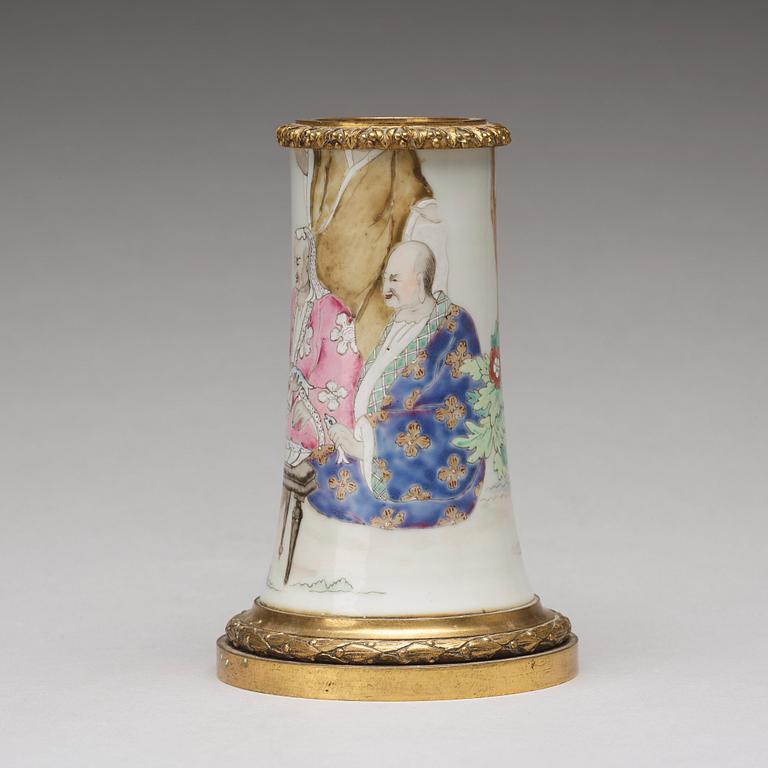
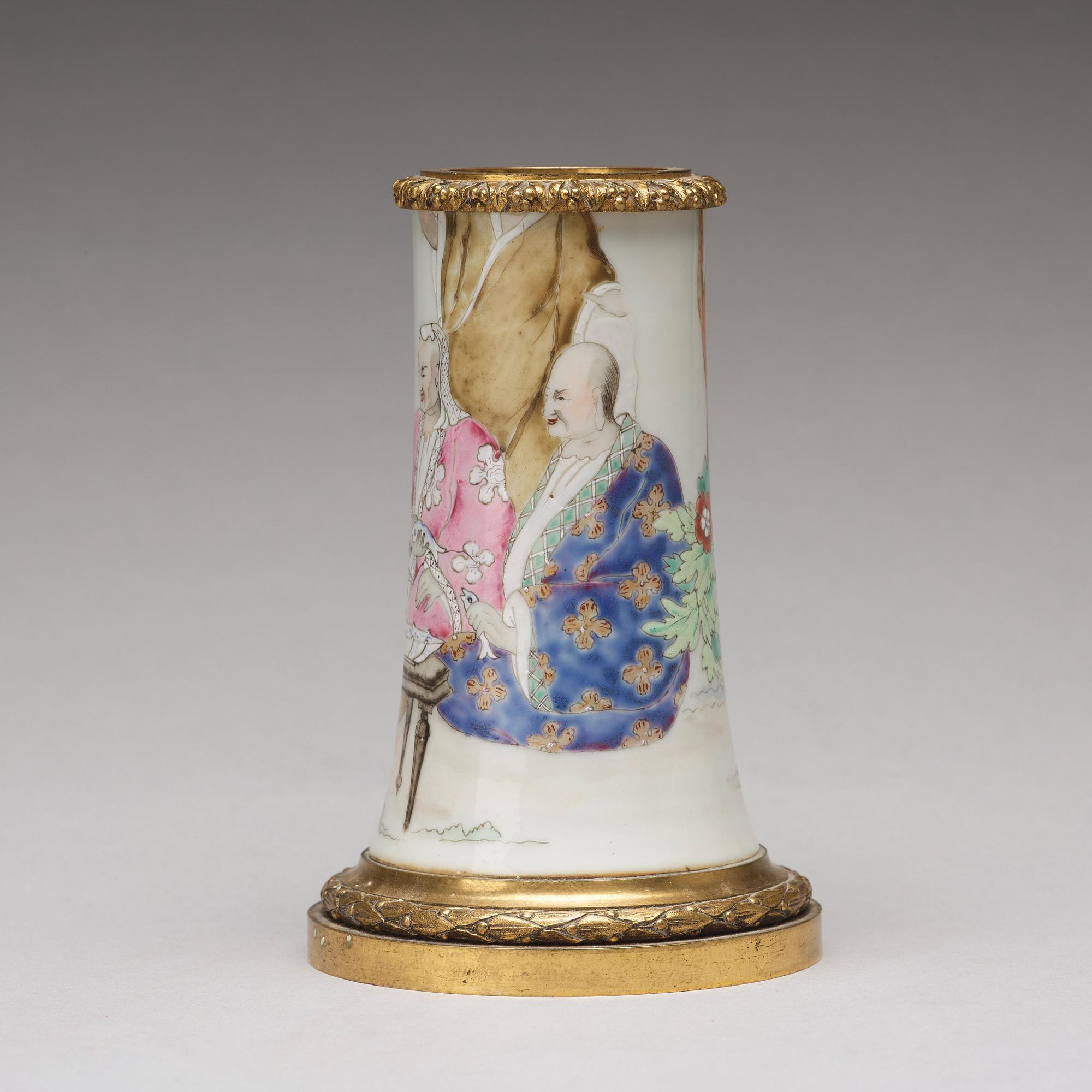
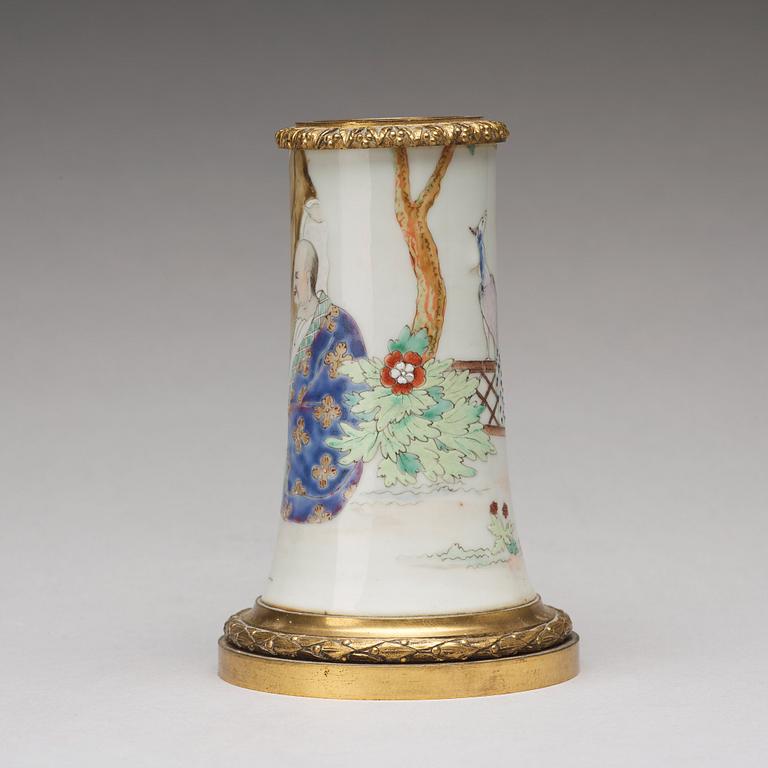
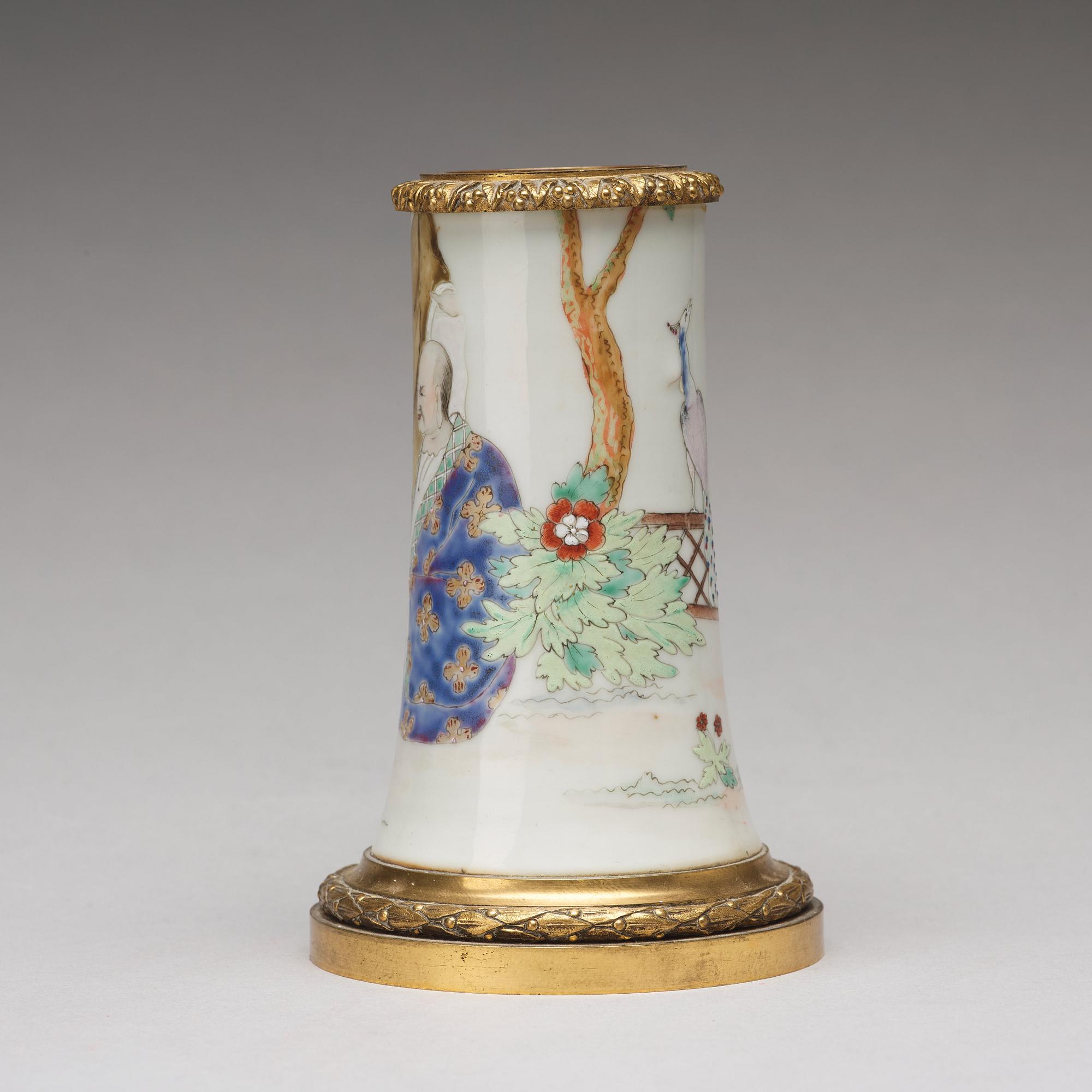
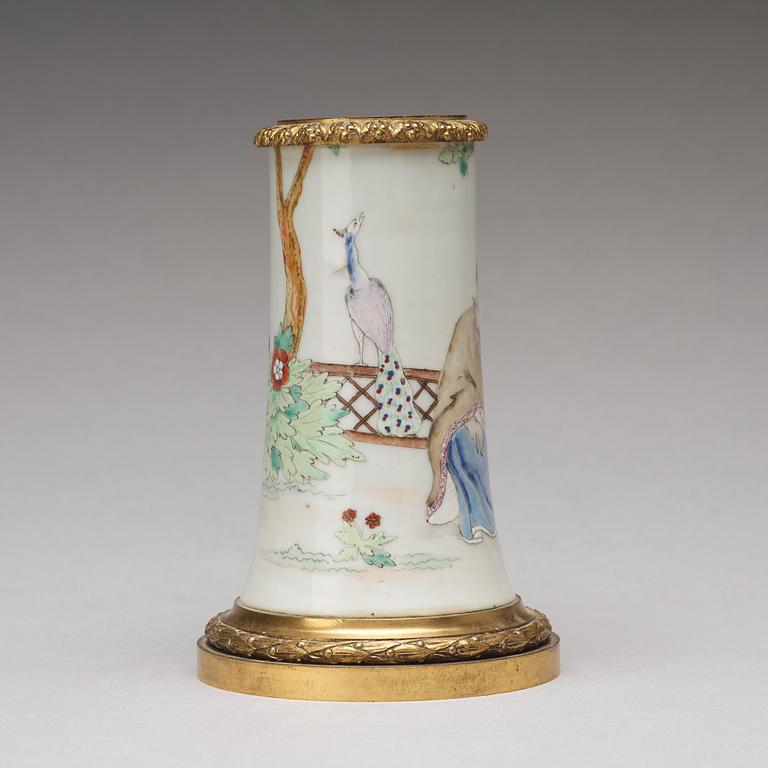
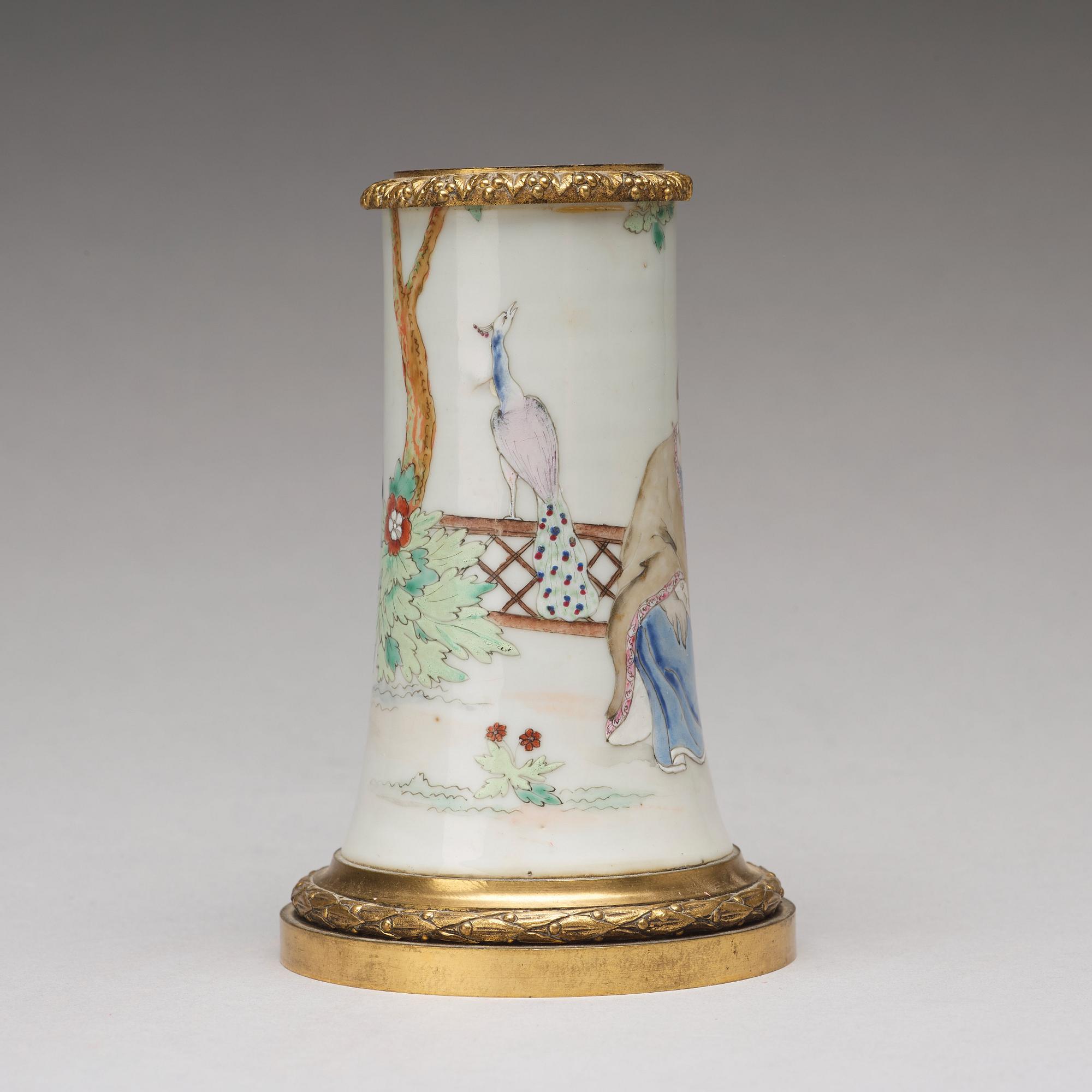
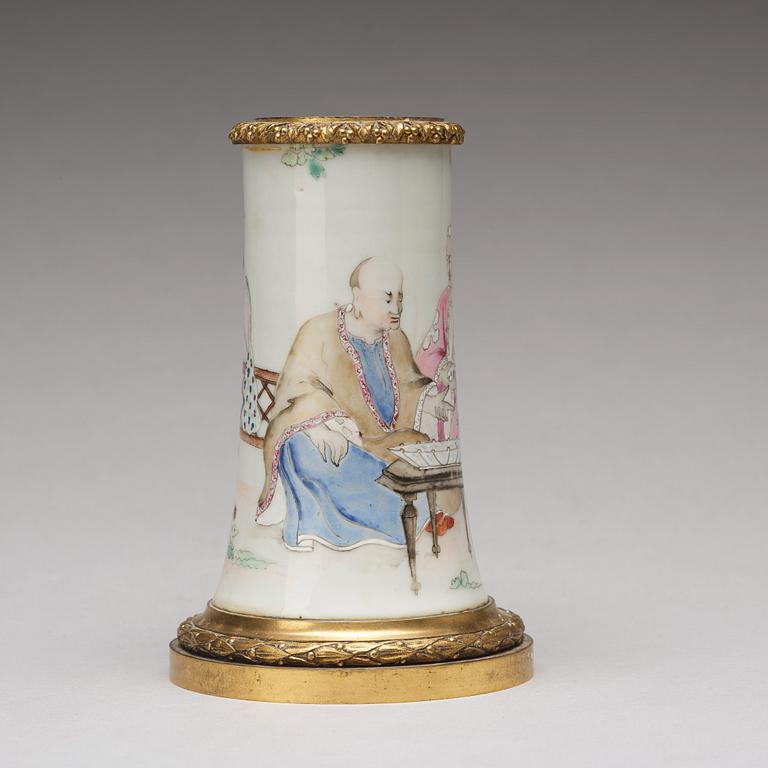
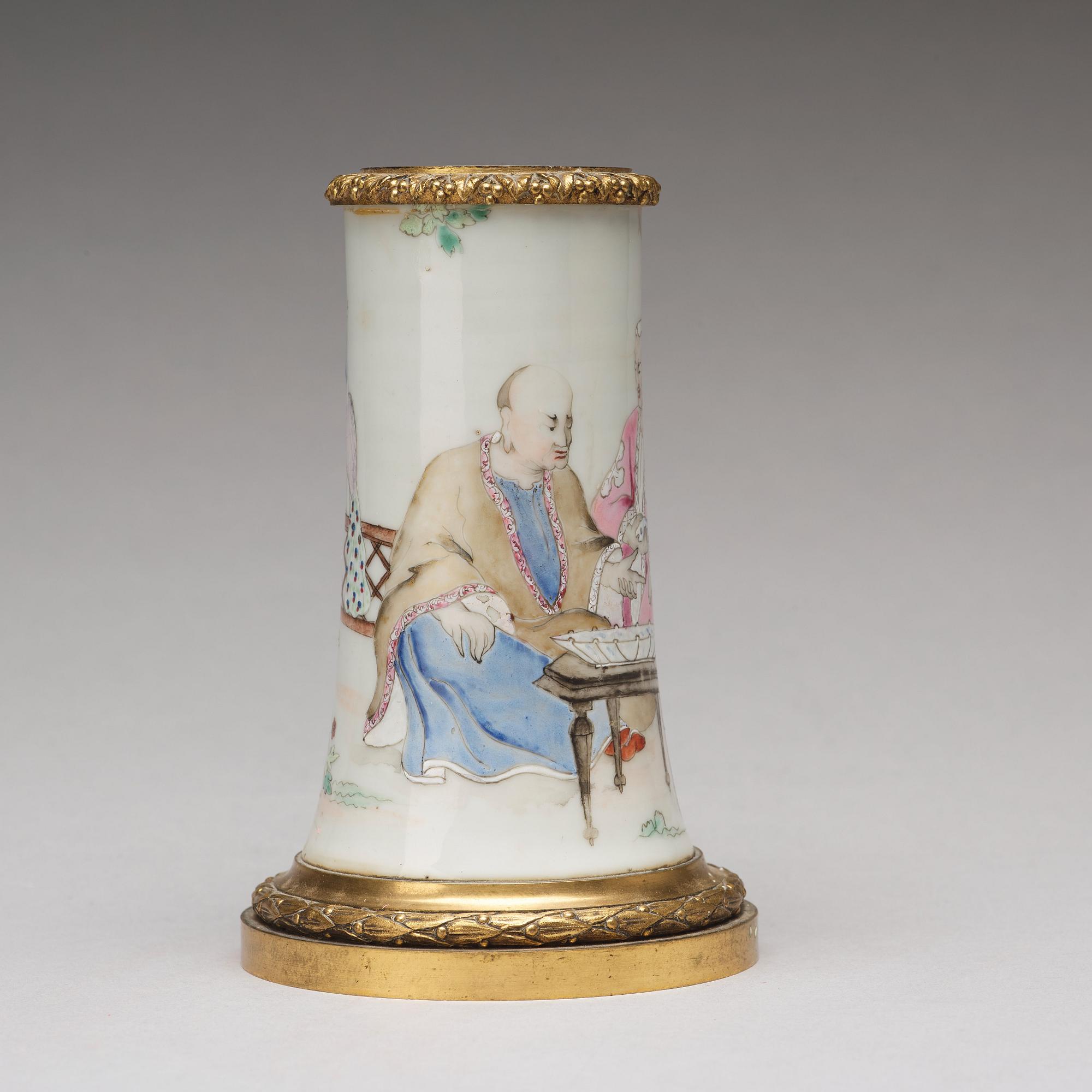
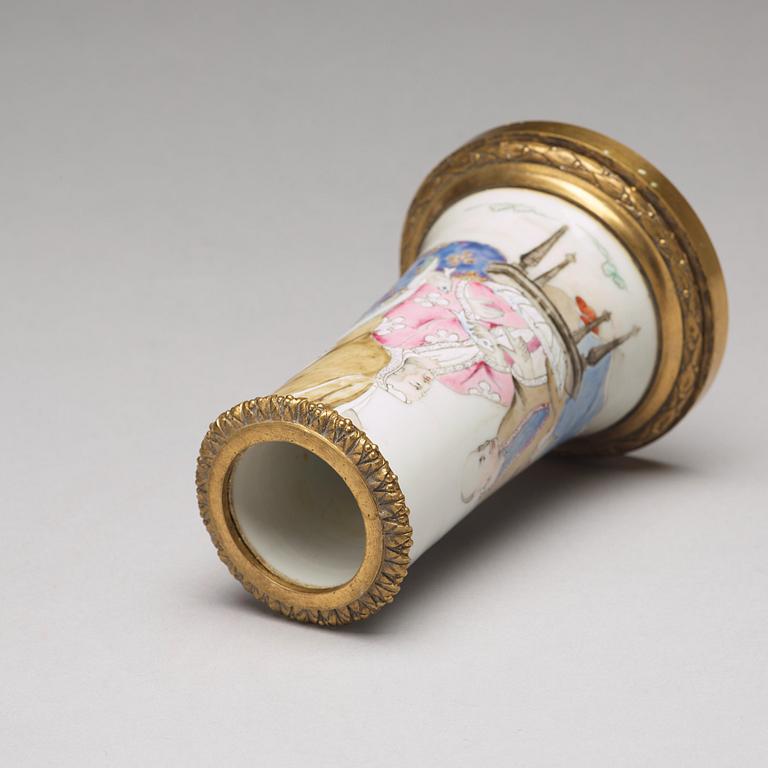
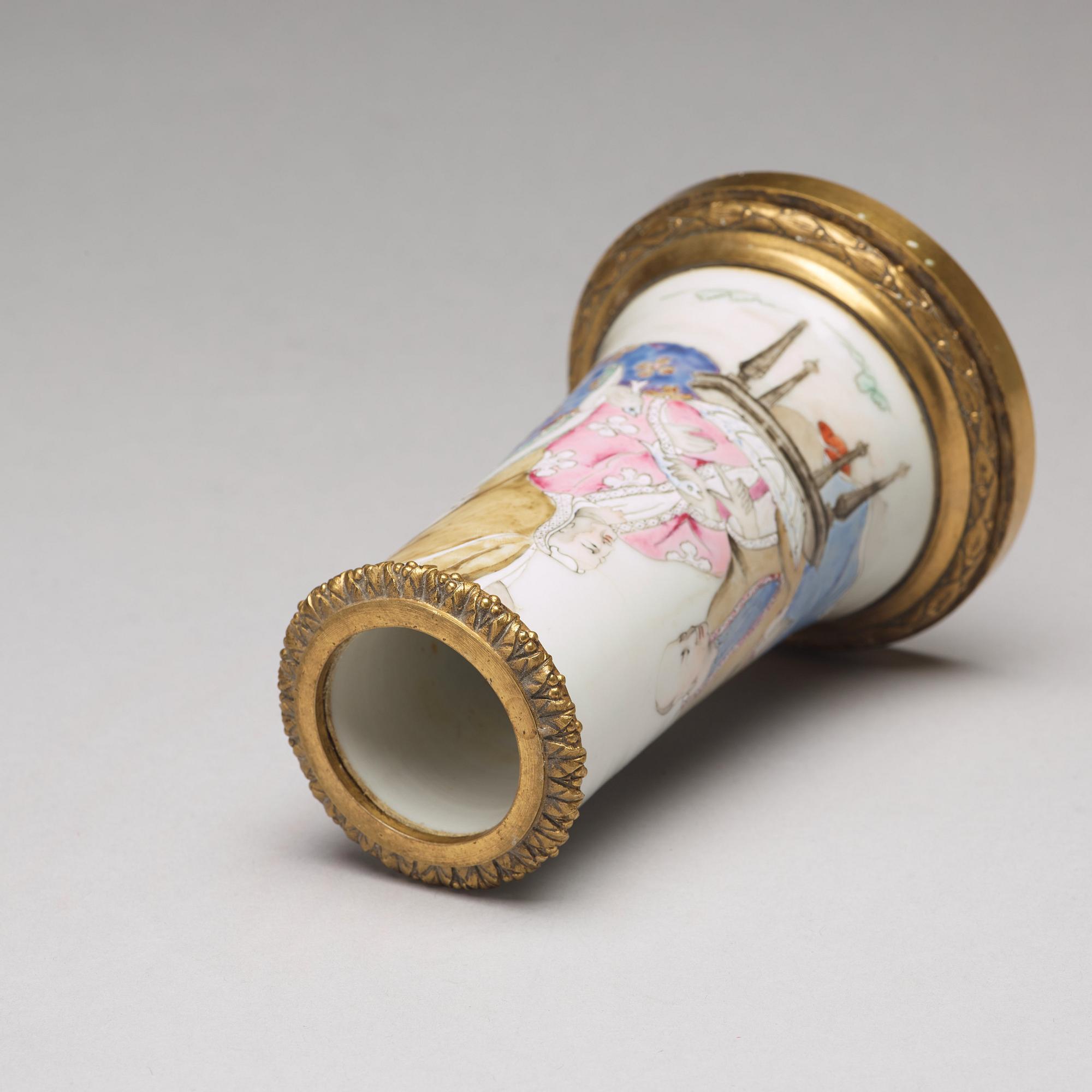
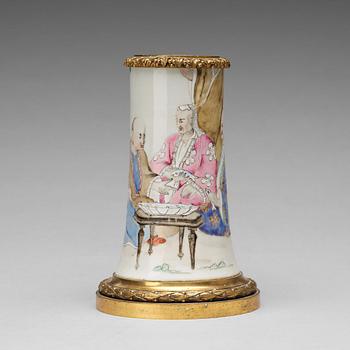
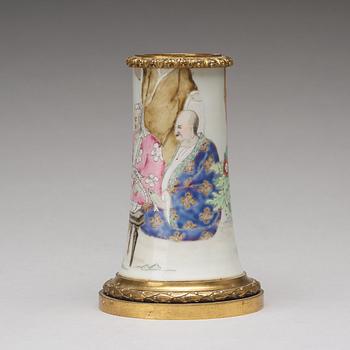
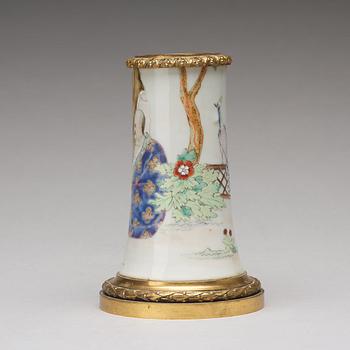
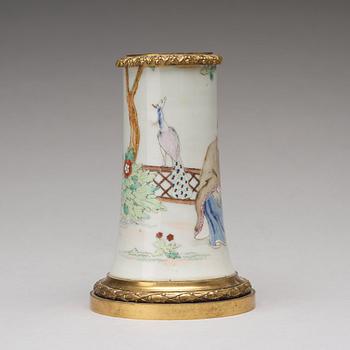
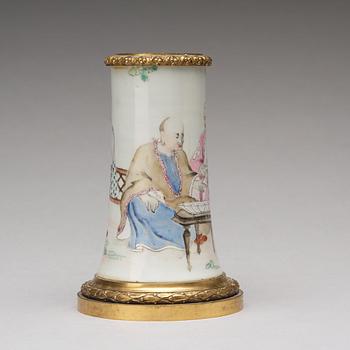
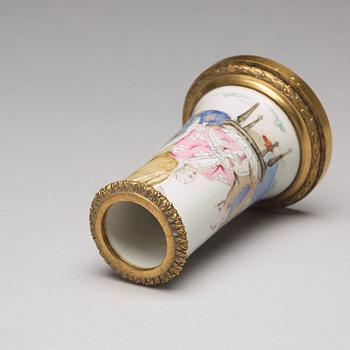
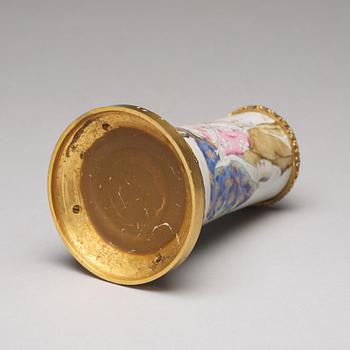
Dekor i famille roserfärger efter förlaga av Cornelis Pronk med fyra figurer samlade vid ett bord, två av dem håller i en fisk. Höjd 16 cm.
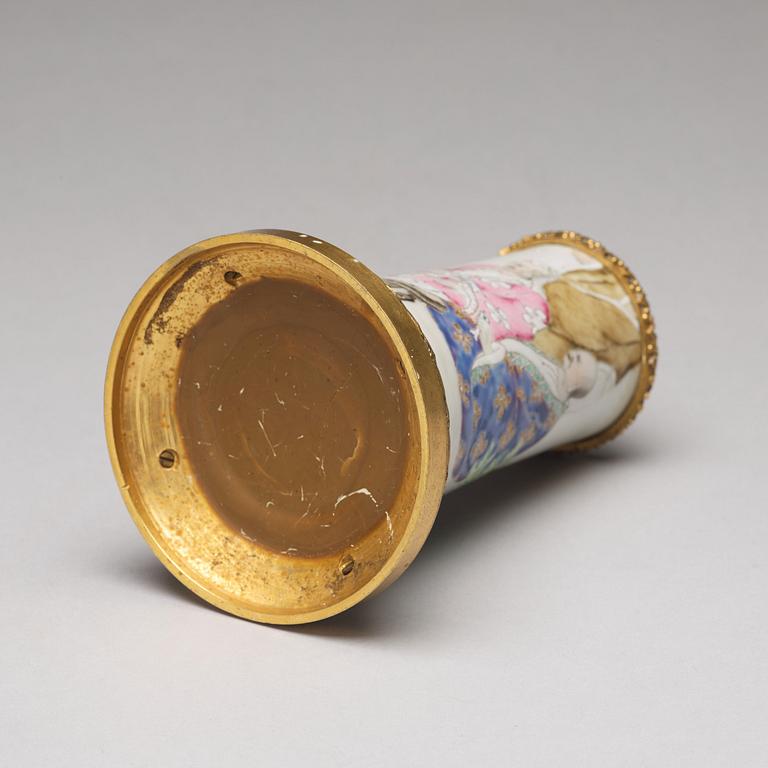
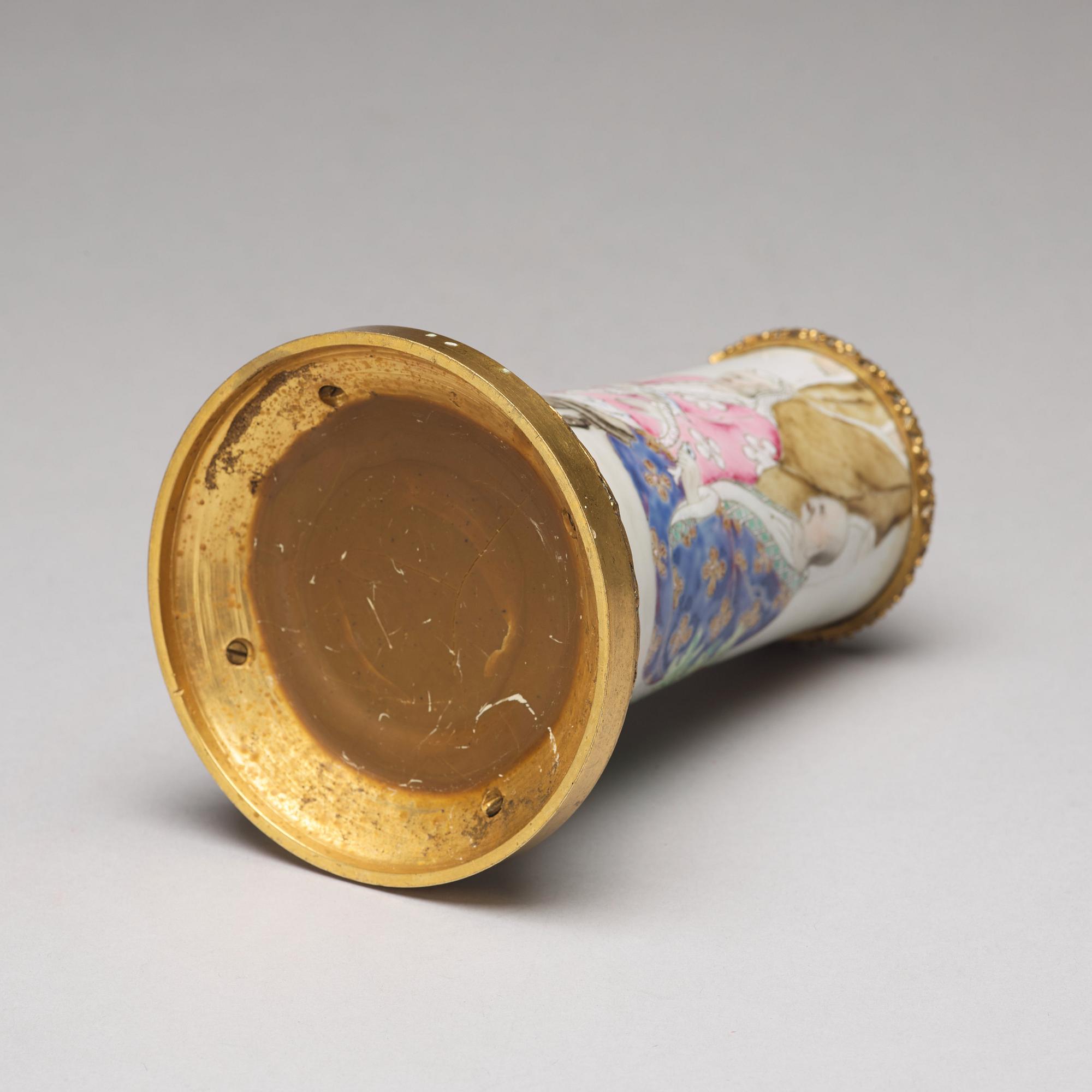
Avkortad. Spricka. Bronsmonteringen troligen tidigt 1900-tal.
Proveniens
Almost all patterns taken from European prints and paintings were commissioned as special orders by captains and supercargoes for their clients in Europe. The Dutch East India Company took part in this specific trade for a limited period between 1734 and 1738, by commissioning the Dutch painter and designer Cornelis Pronk (1691–1759) to produce patterns. These were meant to be sent to Jingdezhen and to be executed onto a vast range of Chinese porcelain, such as garnitures, and dinner and tea services.
This vase, dating to 1738, belongs to this group. The scene, entitled The Doctors or The Doctors Visiting the Emperor, was designed by Pronk in 1735 and sent to China in 1736, arriving only at the end of 1737. The finished products were sent back to the Netherlands at the end of 1738 and in 1739. A second, simpler version of the design with only three figures was sent to China in 1739. This scene was originally designed after a motif in traditional Chinese iconography, illustrating the legend of the woodcutter Wang Shi who encountered three Daoist gods playing chess in a cave.
Utställningar
Compare dishes with this decoration in the collection of Victoria & Albert Museum.
För konditionsrapport kontakta specialist

Andra har även tittat på