





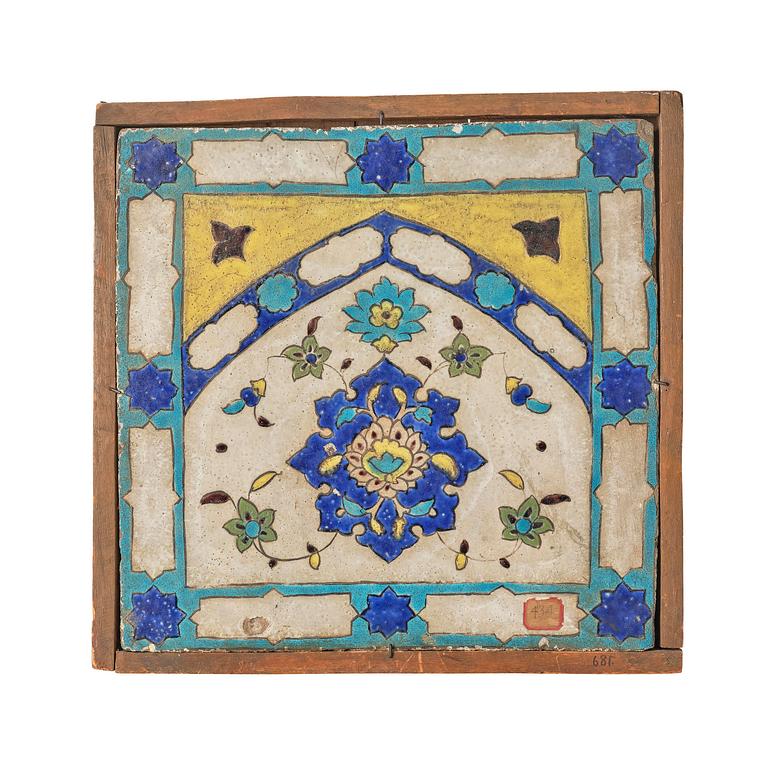
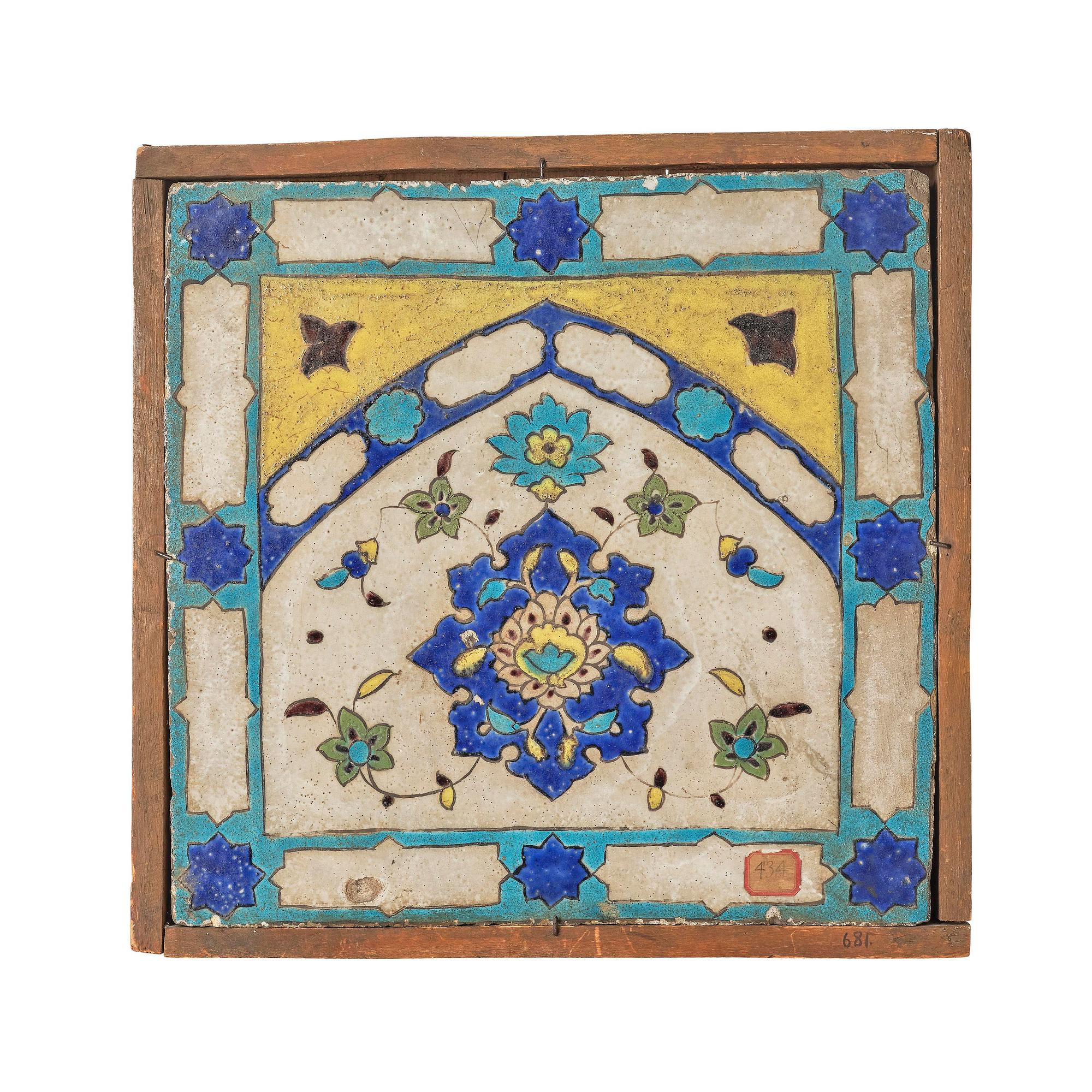
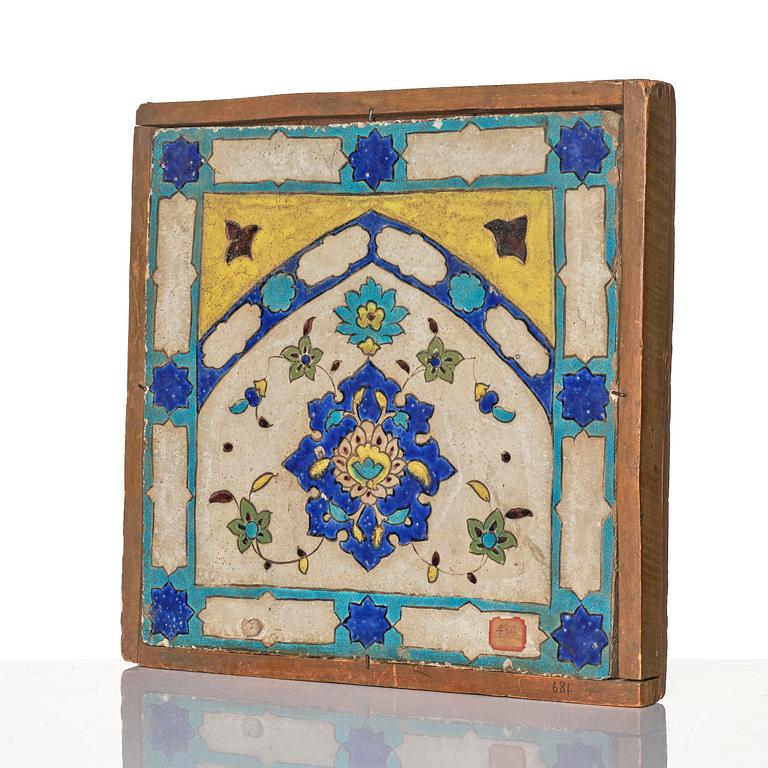
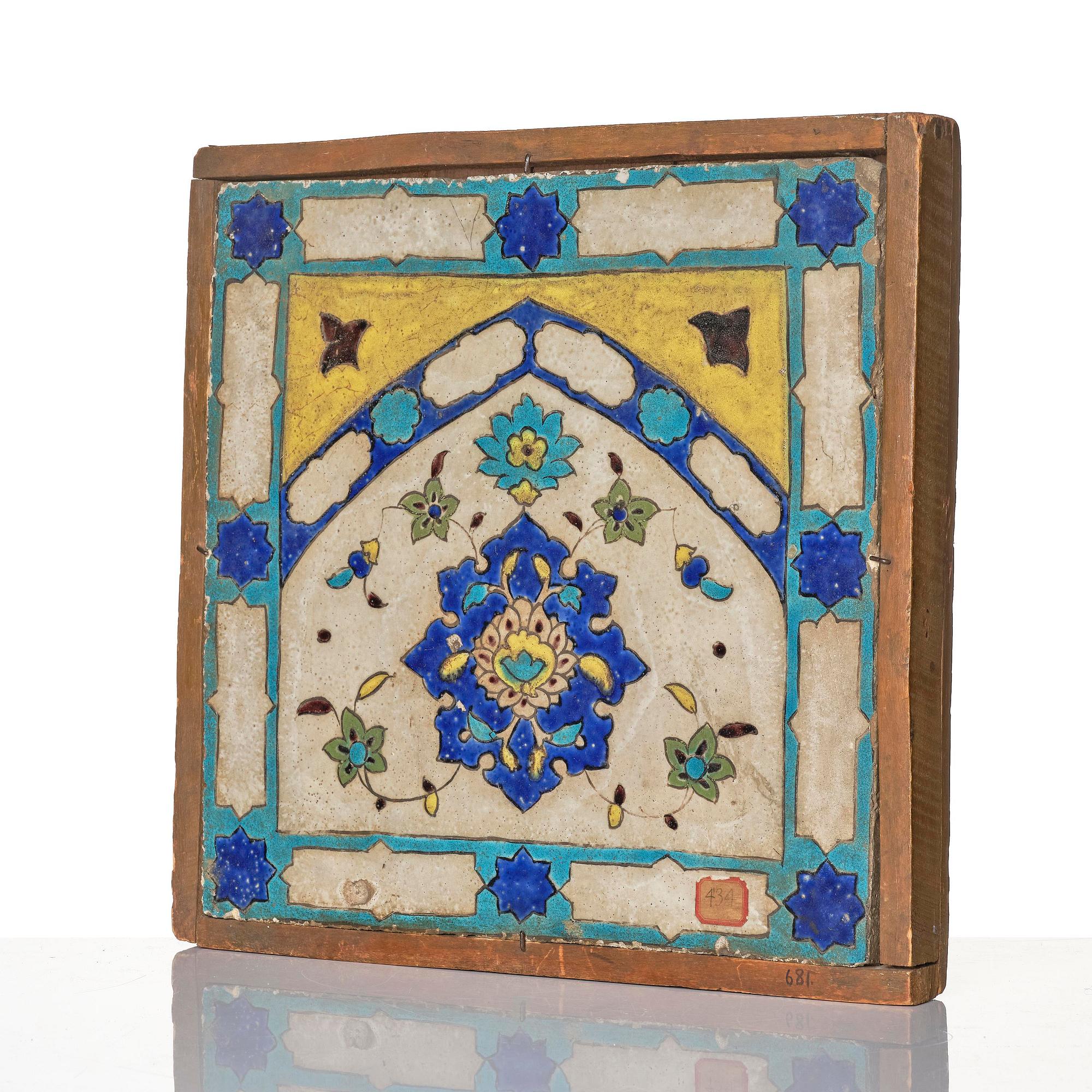
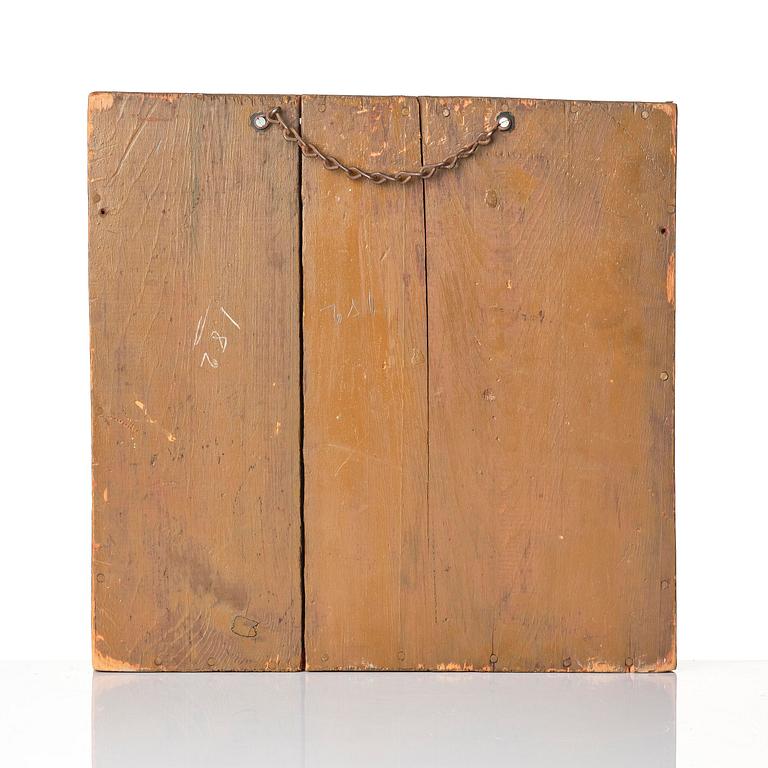
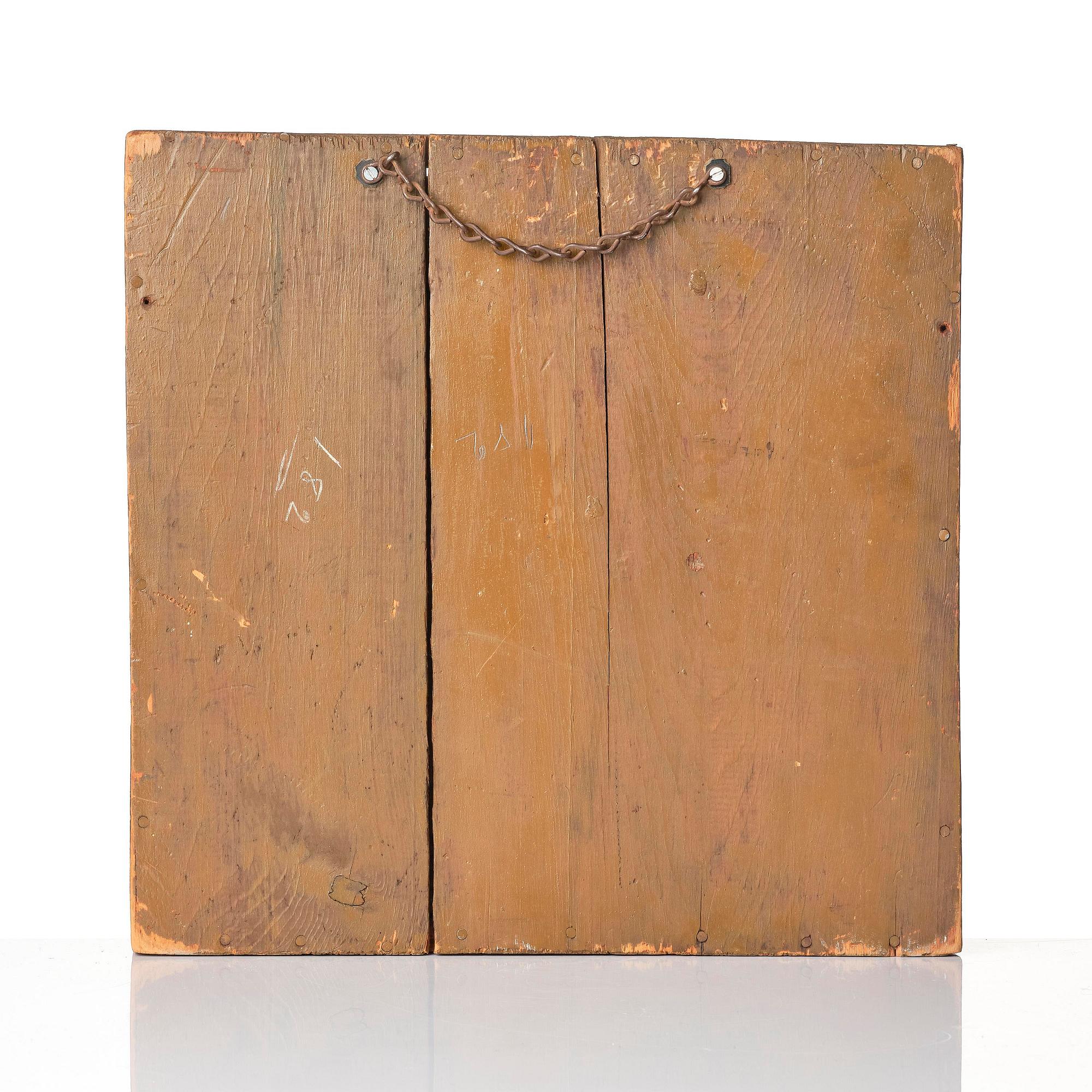
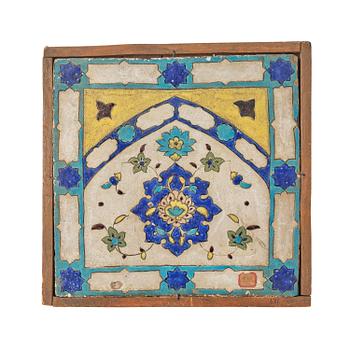
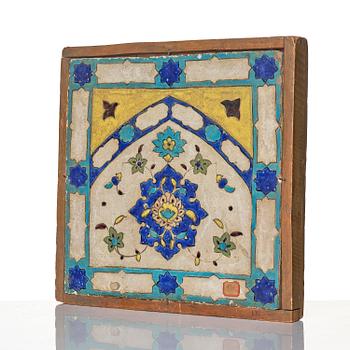
A 'cuerda seca' pottery tile, c. 39 x 40 cm (with mounting 44 x 44 cm), Persia (Iran), the Qajar dynasty (1789–1925).
Tietoa ostamisesta
Lisätietoja ja kuntoraportit
An ivory ground with a large polychrome niche with palmettes and flowers.
Alkuperä - Provenienssi
The Lennart Heyman (1918 – 1974) collection. Lennart Heyman was trained in oriental rugs from his father's wholesale firm Heyman & Olesen in Stockholm. Heyman was a collector and dealer of both antiques and oriental carpets and took assignments as a valuer of carpets in Sweden and abroad, including for Sotheby's and Christie's in London. The business premises were located at Birger Jarlsgatan 3 until his death.
Muut tiedot
This tile panel is created using the cuerda seca technique (Spanish for "dry cord"), which was one of the most commonly used forms of tile decoration in Safavid Iran. This practice developed alongside tile mosaic in the late 14th century in Central Asia. It was a quick method and became particularly popular during Shah 'Abbas's reign (1588-1628).