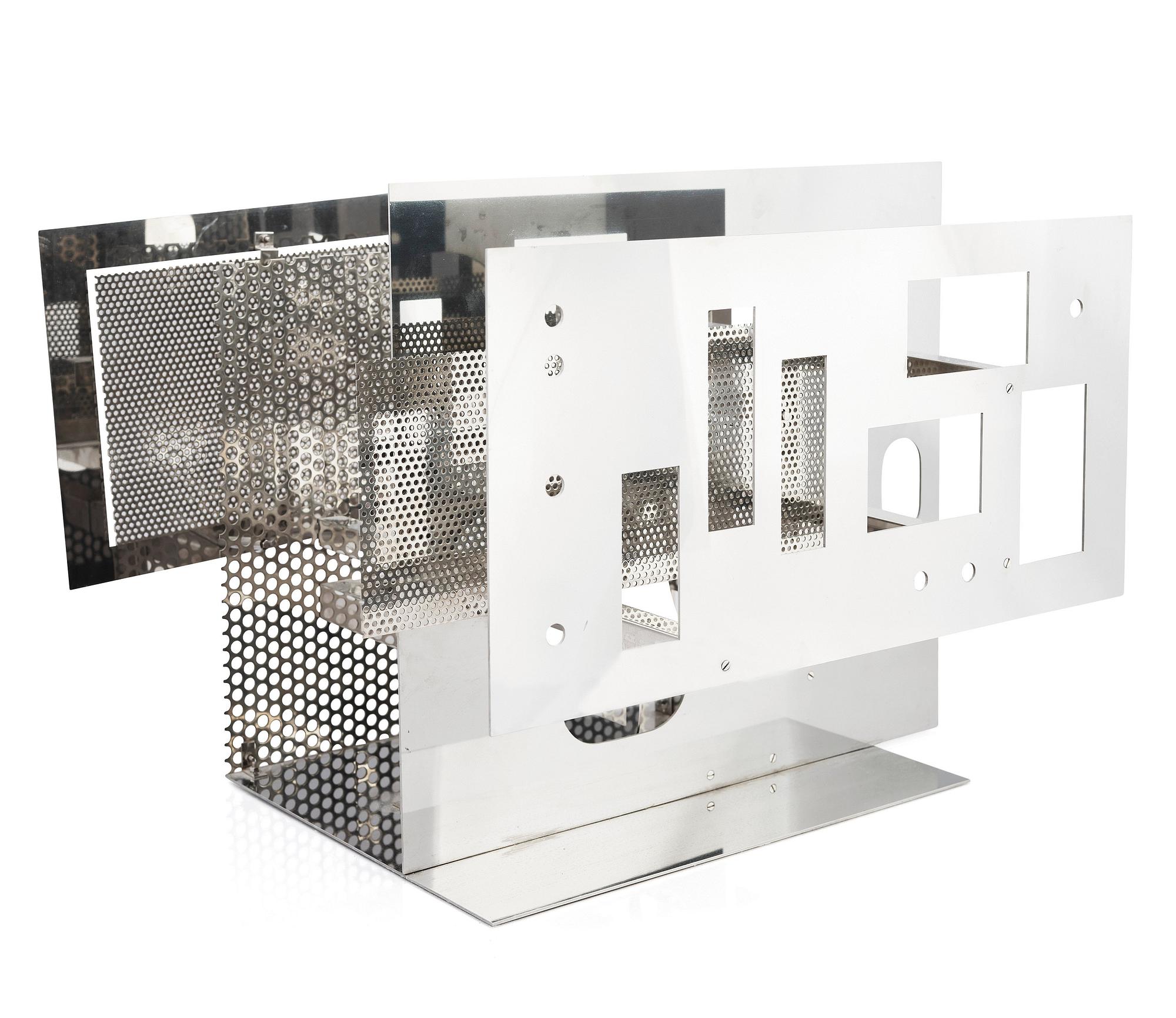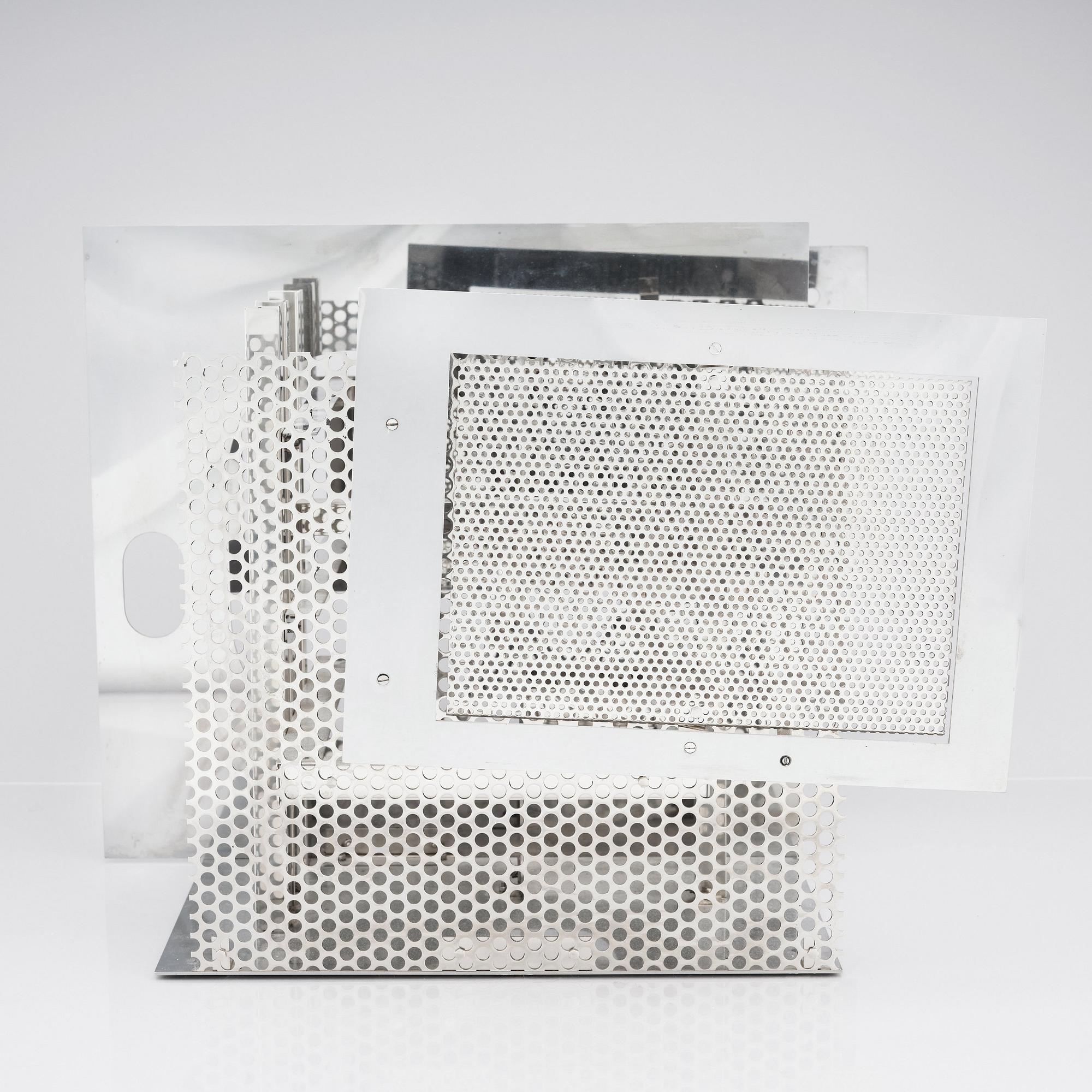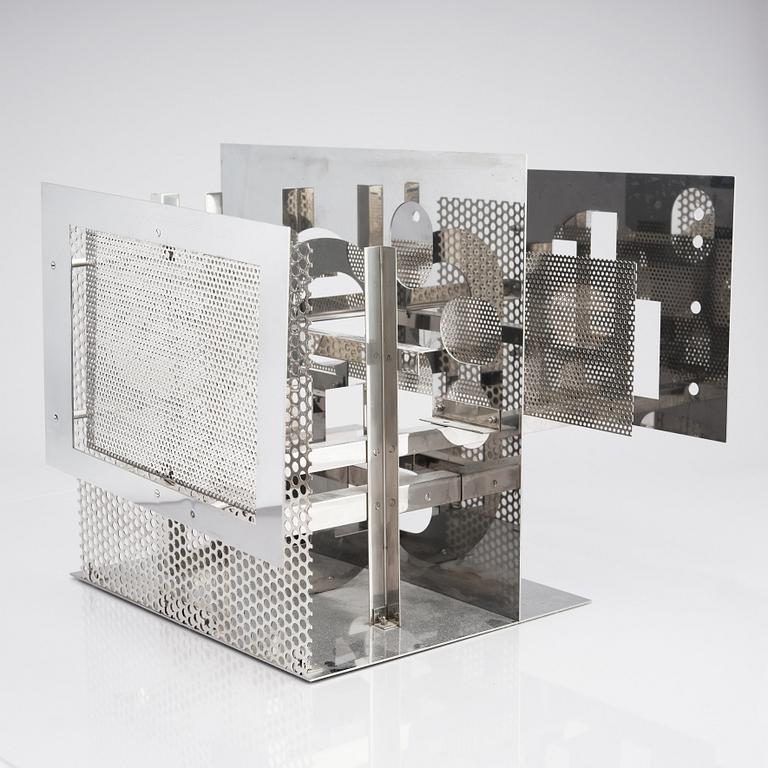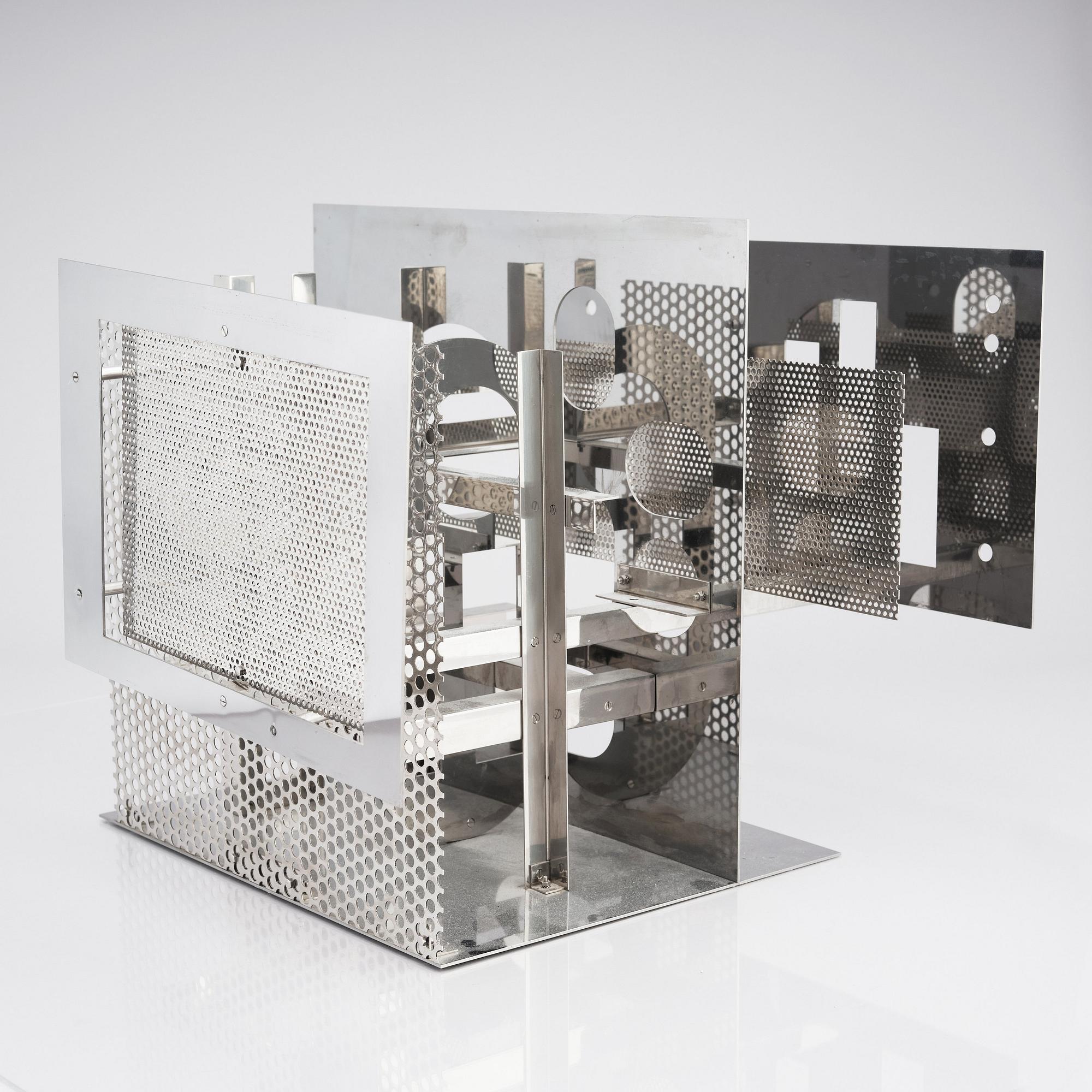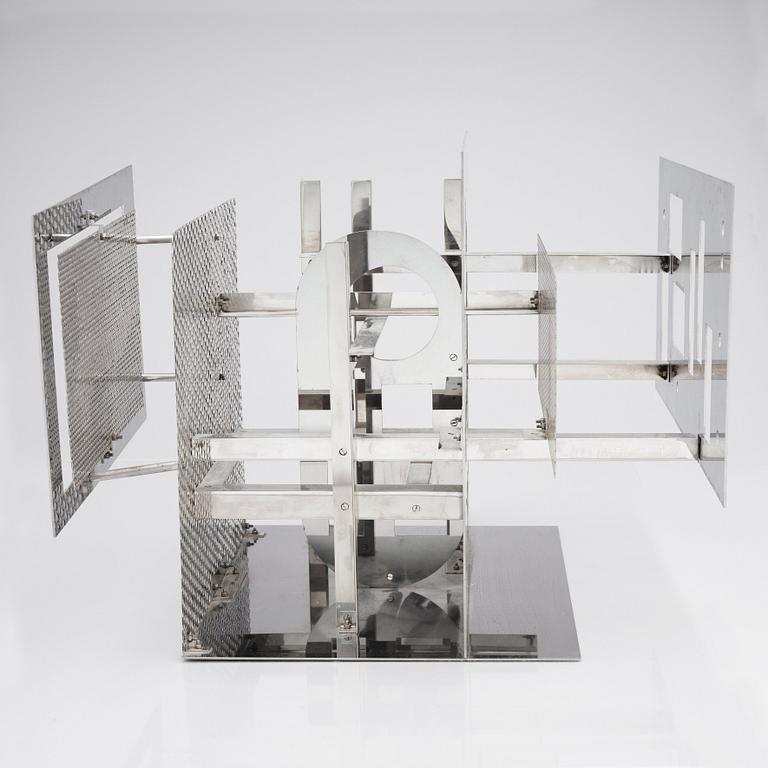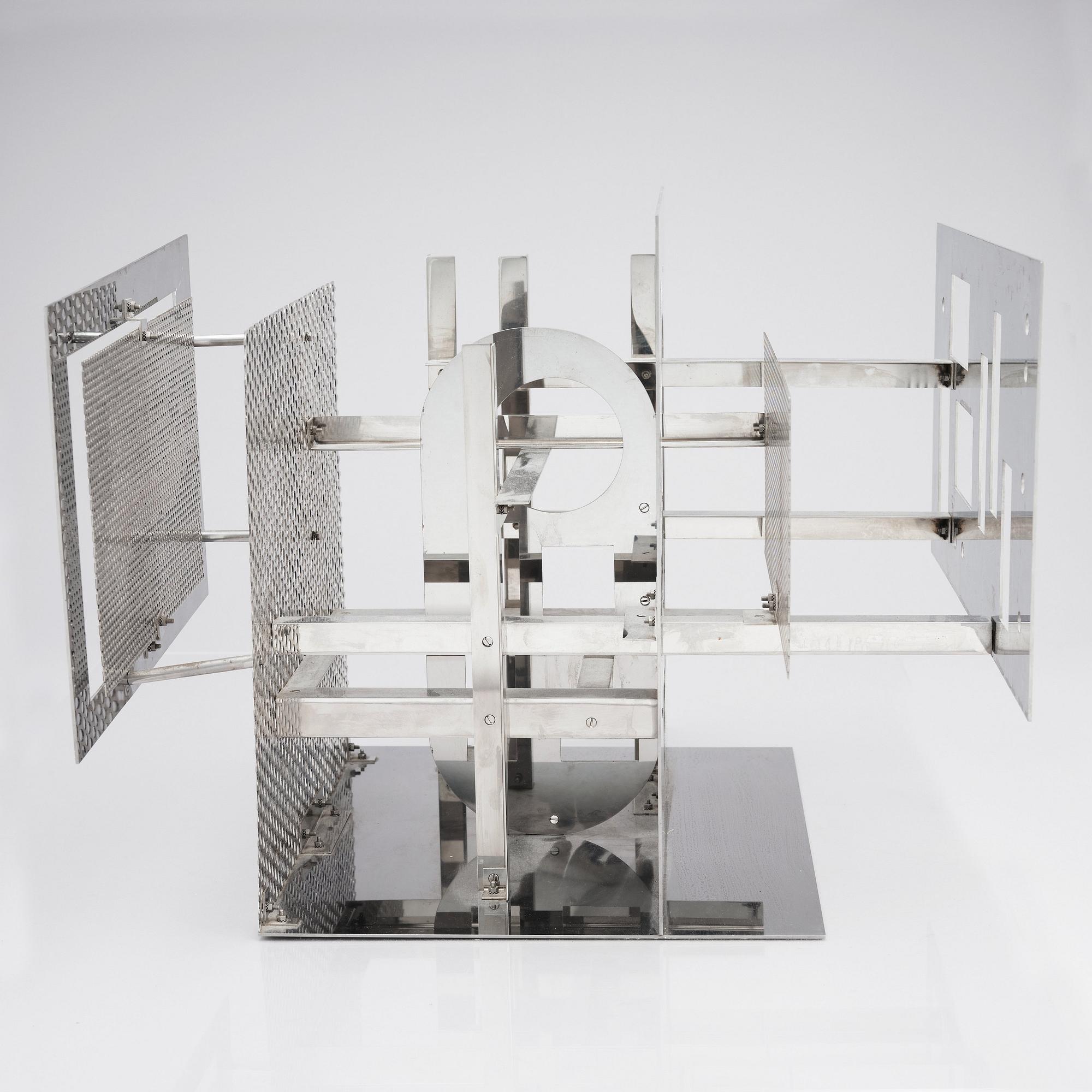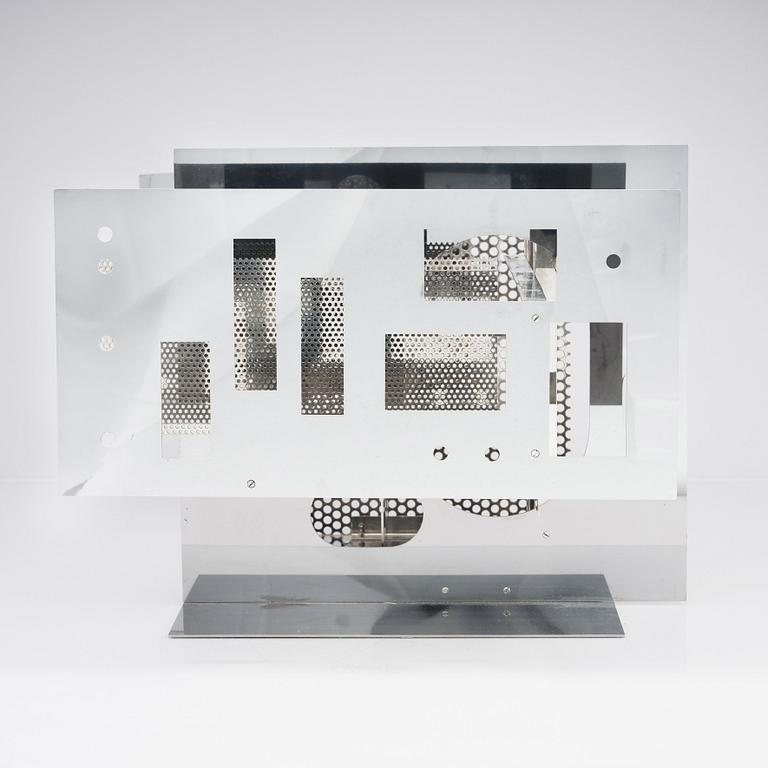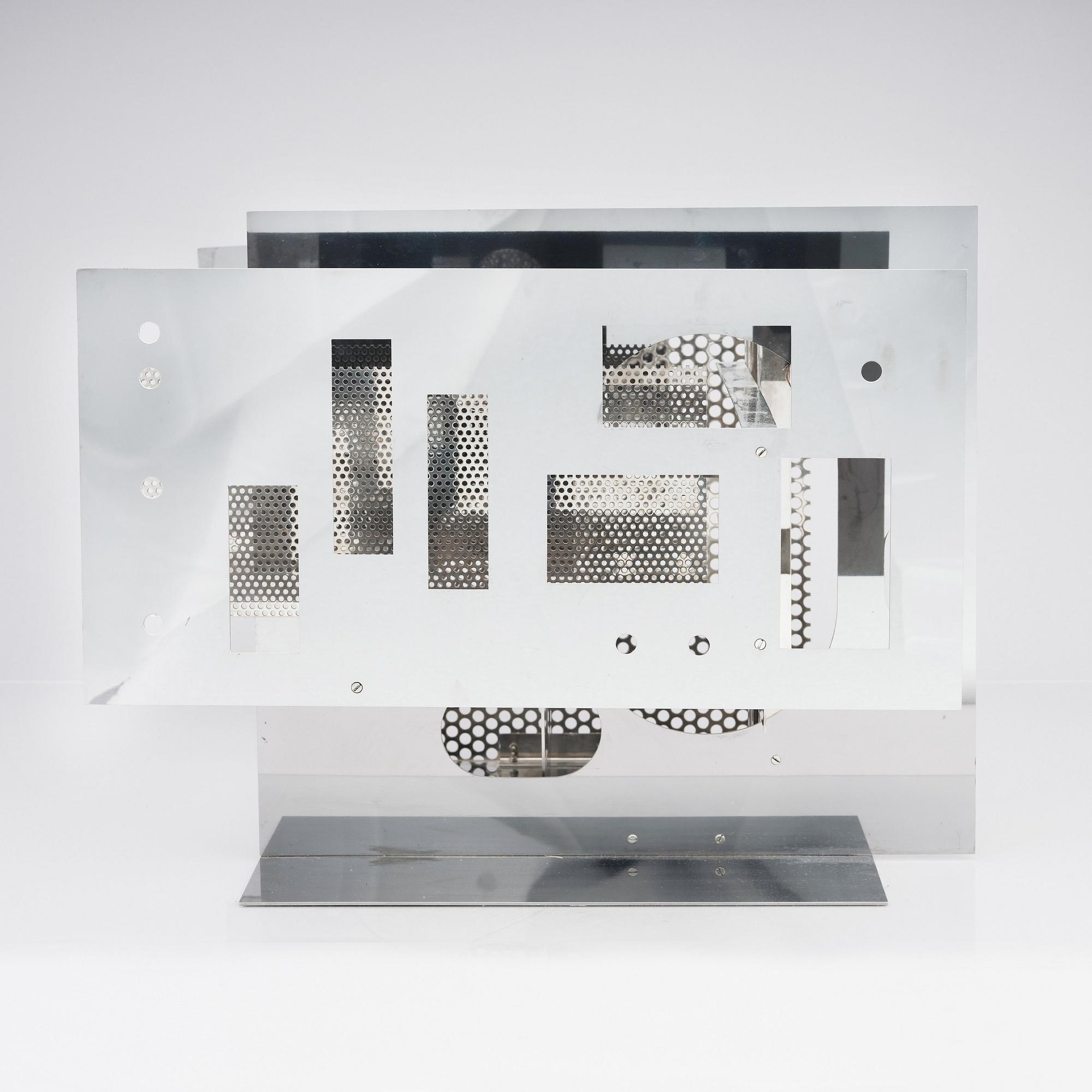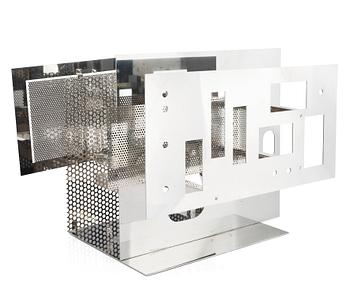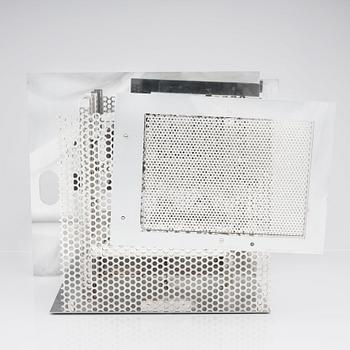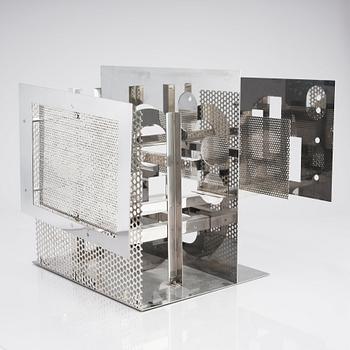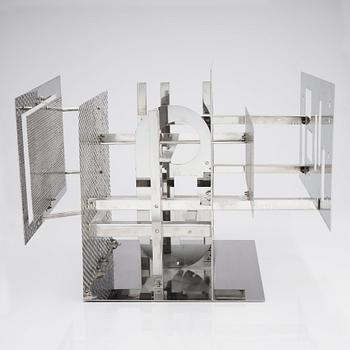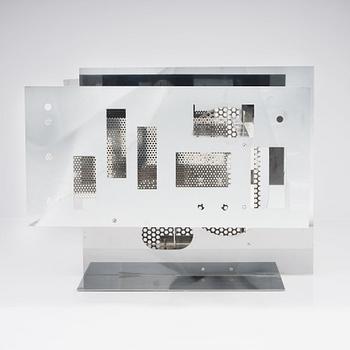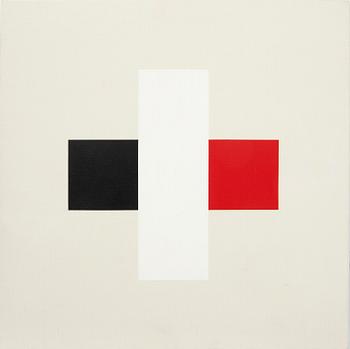
"Lux 12"
Executed 1969. Edition 75. Metall, höjd 41, bredd 55 och djup 50 cm.
Alkuperä - Provenienssi
Galleri Konstruktiv Tendens, Stockholm, by Galerie Denise René, Paris.
Muut tiedot
Nicolas Schöffer believed that art should be dynamic and fluid. In the mid-1940s he began to create metal sculptures favoring a stripped-down formal vocabulary that embodies the influence of Russian Constructivism and its Dutch counterpart, De Stijl. Schöffer brought to this art-historical foundation an interest in scientific progress, especially the realms of cybernetics and theoretical physics. He started to program his sculptures with feedback systems that allowed them to interact with viewers and the surrounding environment, connecting art with technology. In 1956, he created CYSP 1—a groundbreaking construction with an electronic “brain” that emits light and sound, moves at various speeds, and reacts to color and heat. The artist was even able to program the work to perform alongside human dancers.
By the 1960s, Schöffer began to take his work in a direction he referred to as "luminodynamism," a shift that resulted in his series of Lux sculptures generating a painterly form of kinetic art in its unfolding of shadow and reflected light.
Lisätietoja ja kuntoraportit

Kuuluu jälleenmyyntikorvauksen piiriin
Tietoa ostamisesta
Kuvan käyttöoikeudet
Tämän tietokannan taideteokset ovat tekijänoikeudella suojattuja, eikä niitä saa kopioida ilman oikeudenhaltijoiden lupaa. Teokset kopioidaan tässä tietokannassa Bildupphovsrättin lisenssillä.