












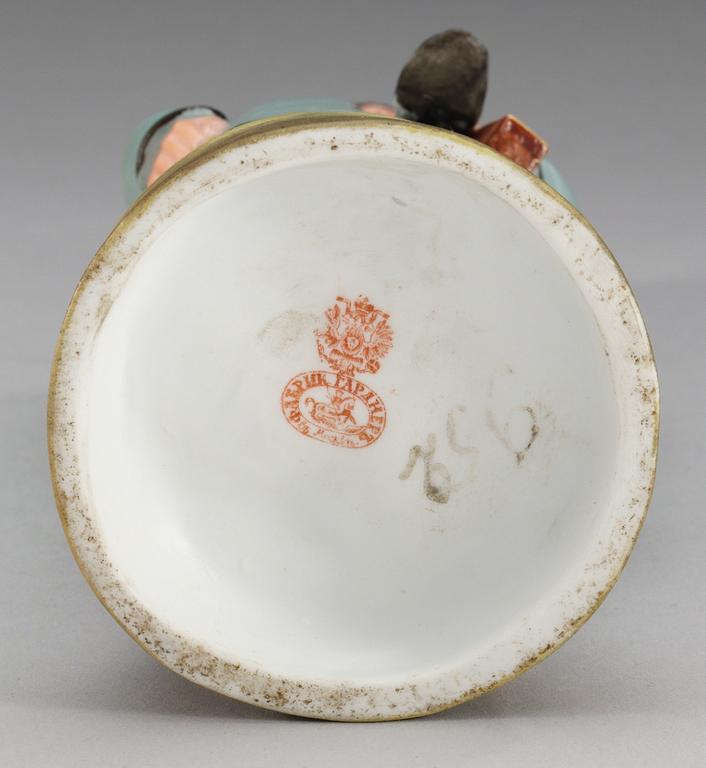
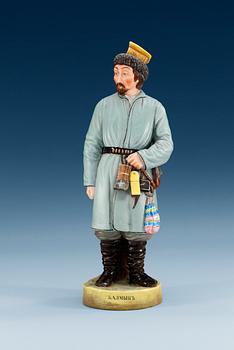
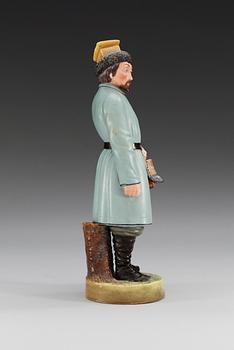
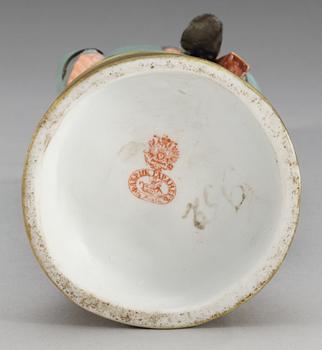
A Russian bisquit figure of a Kalmykian man, Gardner/Kuznetsov manufactory, ca 1900.




Tietoa ostamisesta
Lisätietoja ja kuntoraportit

Height 27,5 cm.
Chip to attribute in his left hand.
Alkuperä - Provenienssi
From the 'Peoples of Russia' series.
Kirjallisuus
Gardner, Chapter V, Published 2003. Pl 20-21.
Muut tiedot
The Gardner factory in Moscow started to produce the ‘People of Russia’ series in the 1870’s, the complete series consists of approximately 50 figures. The series were based on colour lithographies from a book published 1861 by T de Pauli. The book was called ‘Description Ethnografique des peoples de la Russie’, and was presented at the celebration of the Russian Empire millennium. It gives us a broad coverage of the people under the Russian Emperors reign, showing subjects ranging from Hindus, Balkans, Greeks all the way to the Siberians and the Russian Americans. This series follows the tradition of the J.D. Rachette series of the Imperial porcelain manufactory (1780’s). The figures truly are like small sculptures, all very individual.
Kalmyk is the name given to western Mongolic people - Oirats who migrated from Central Asia in the seventeenth century. Today they form a majority in the autonomous Republic of Kalmykia on the western shore of the Caspian Sea.