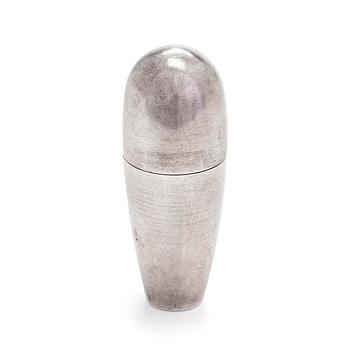
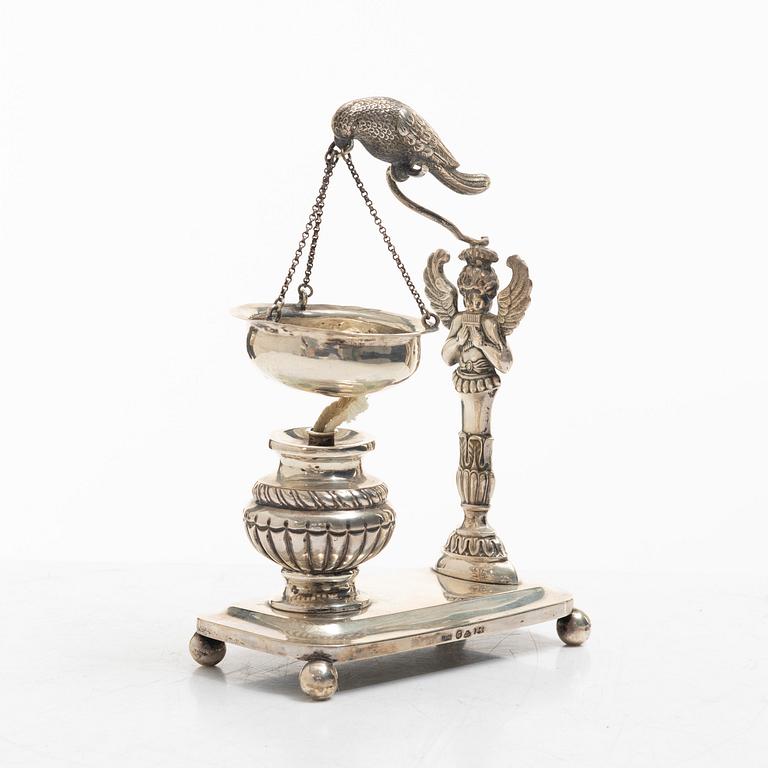
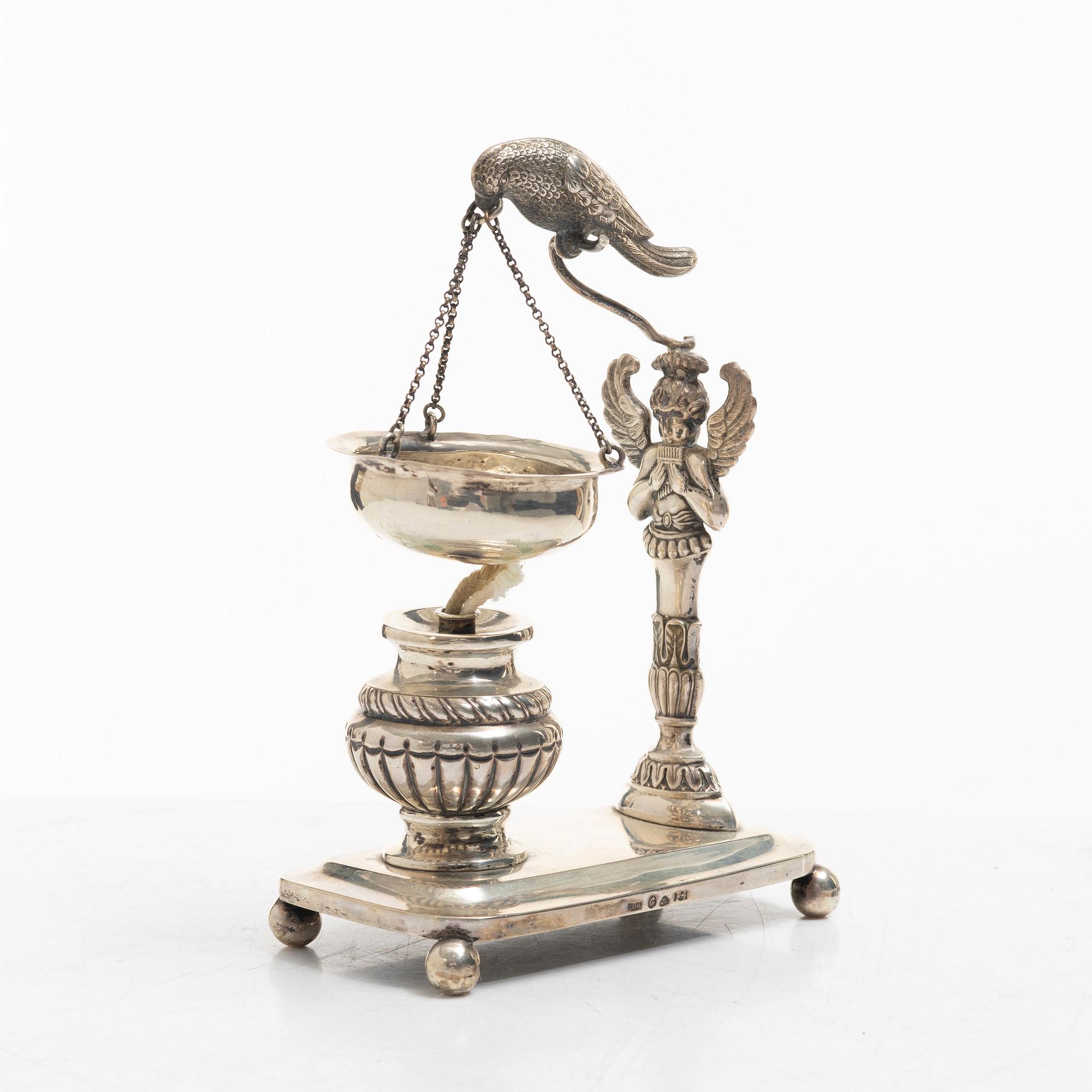
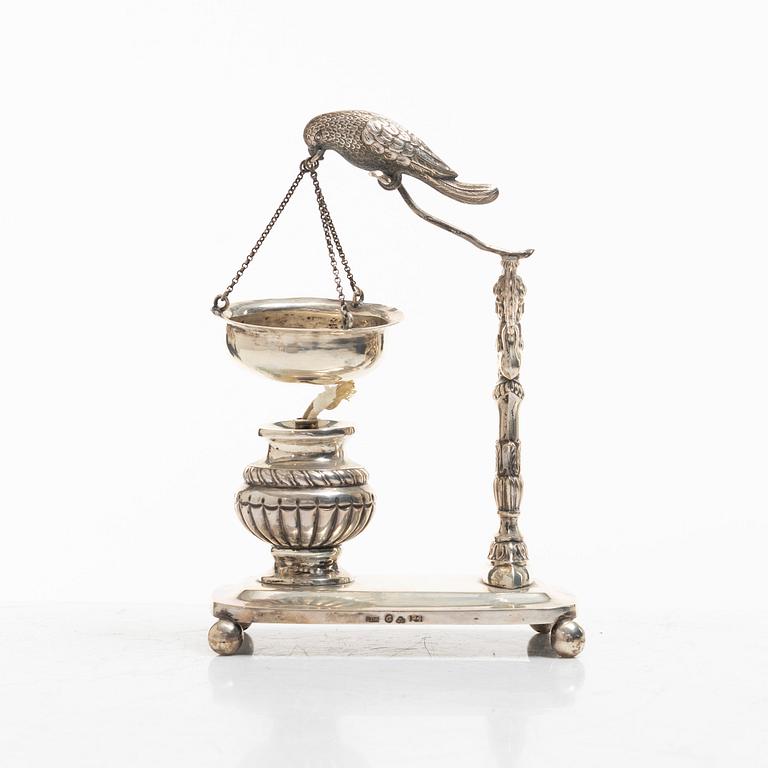
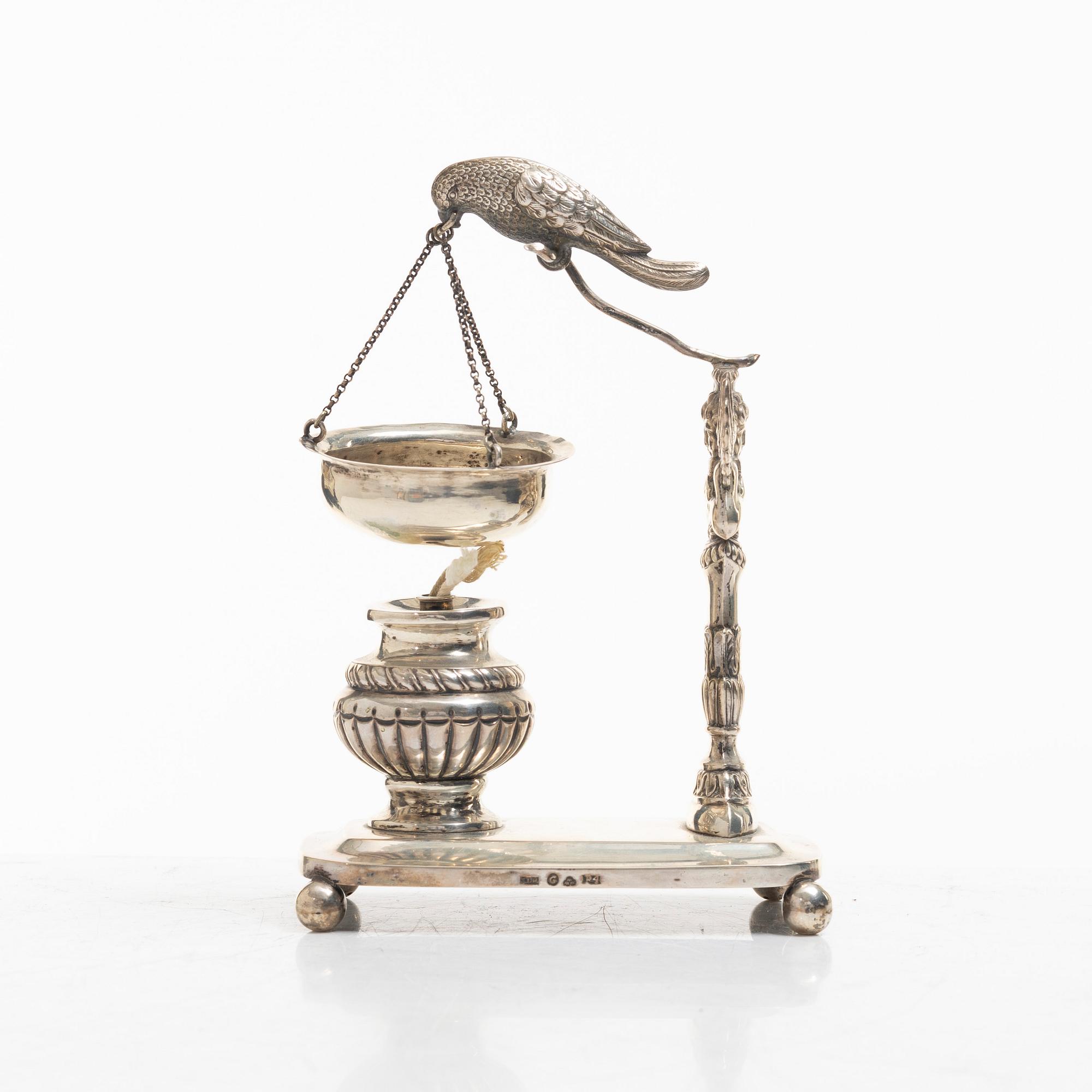
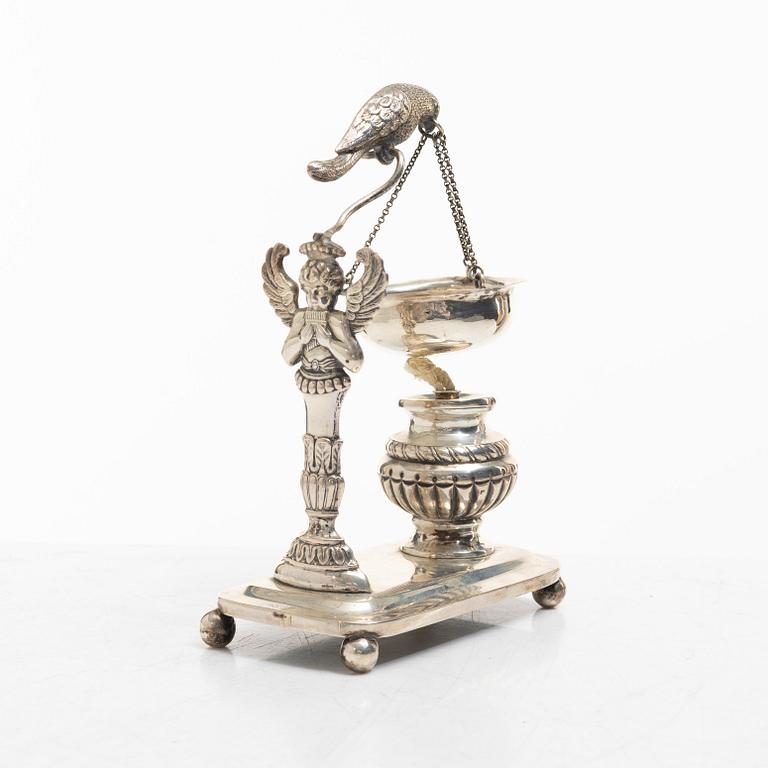
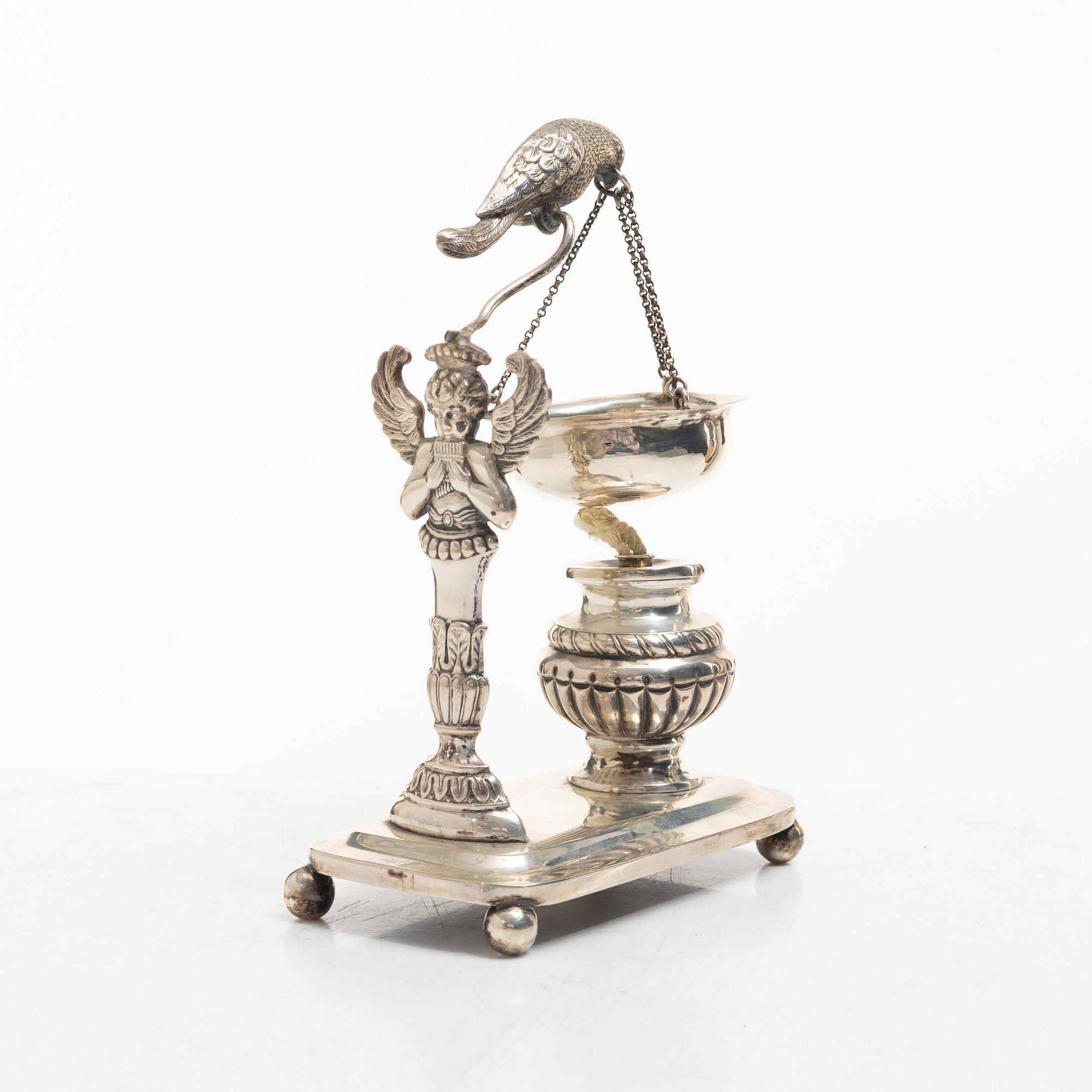
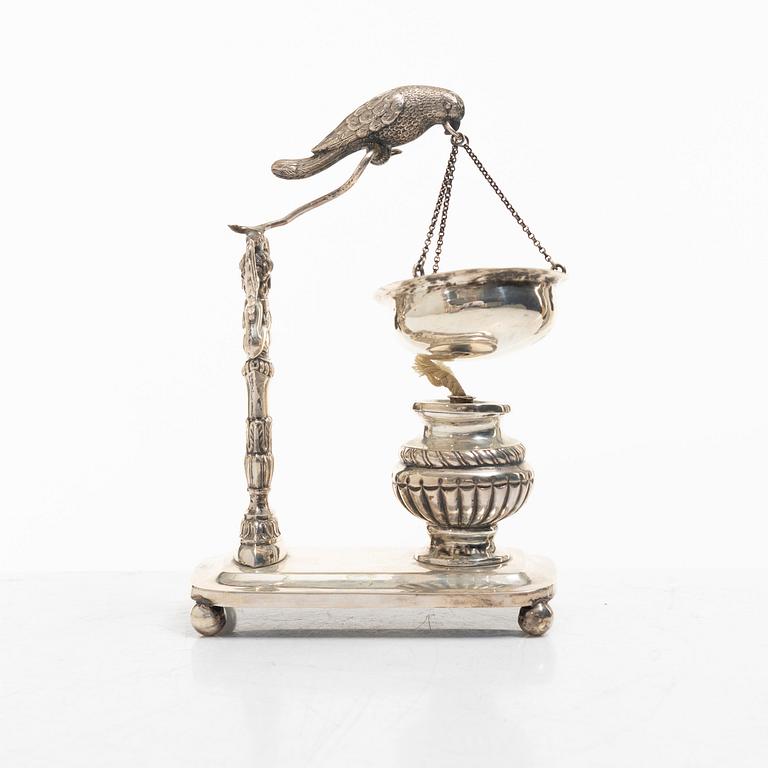
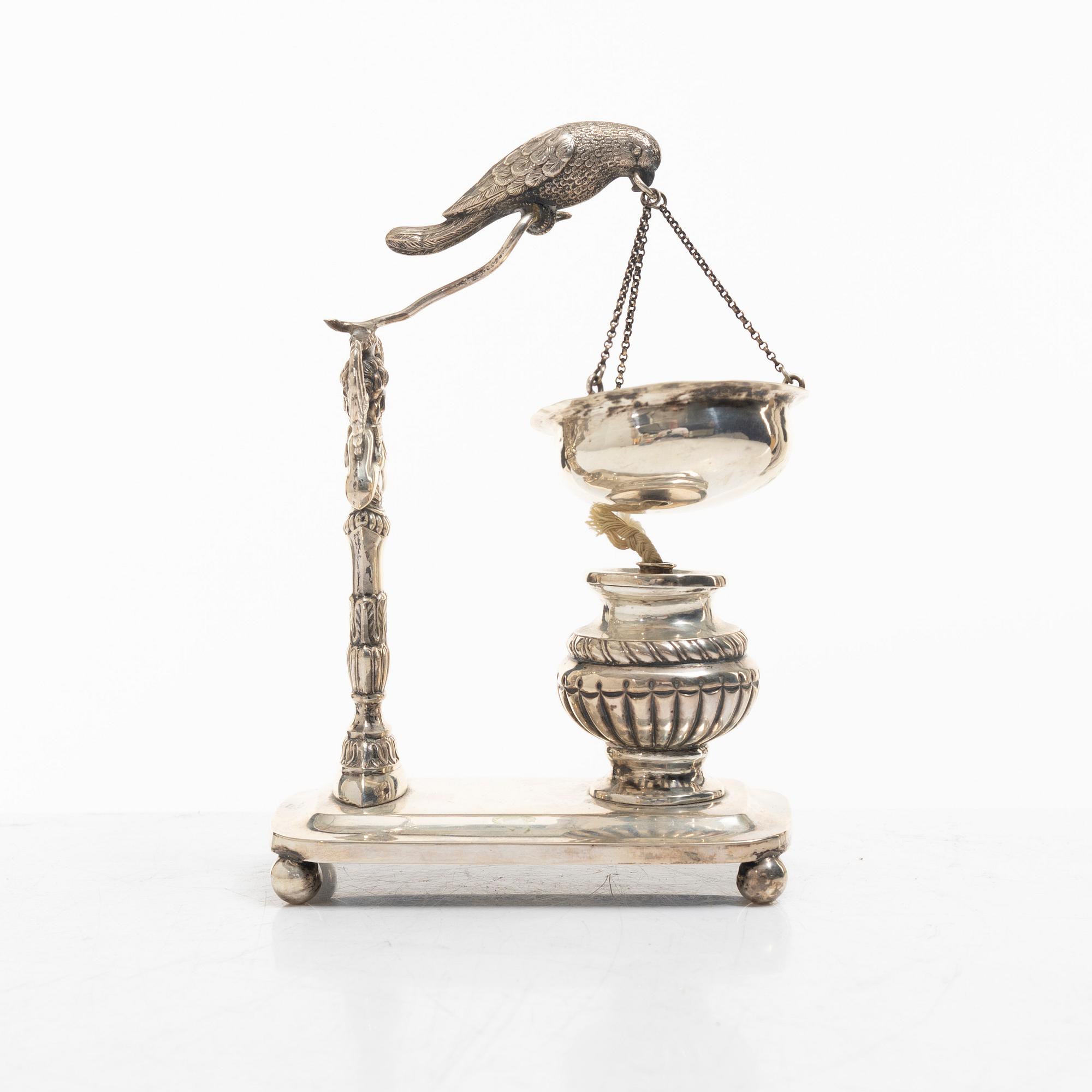
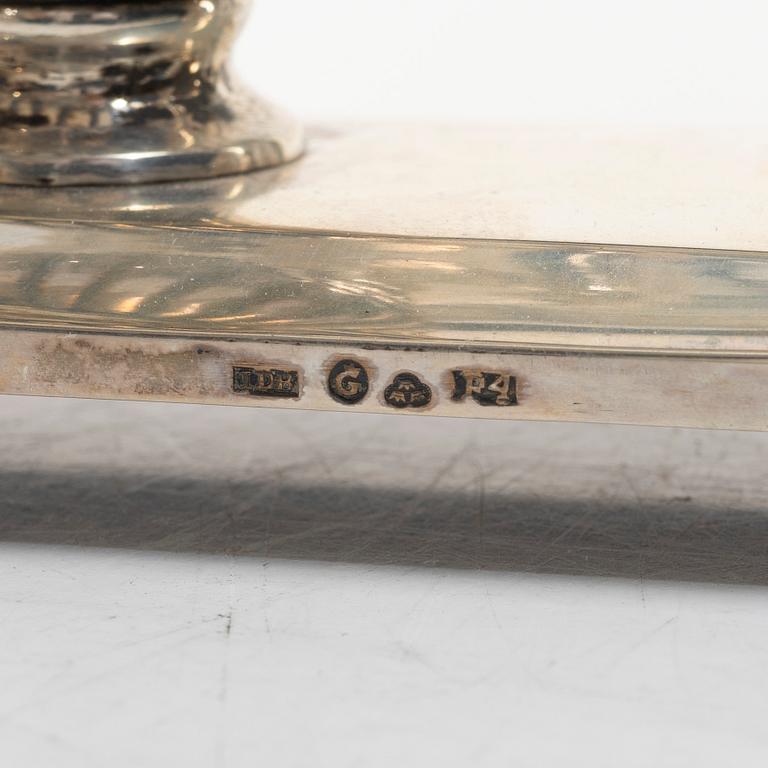
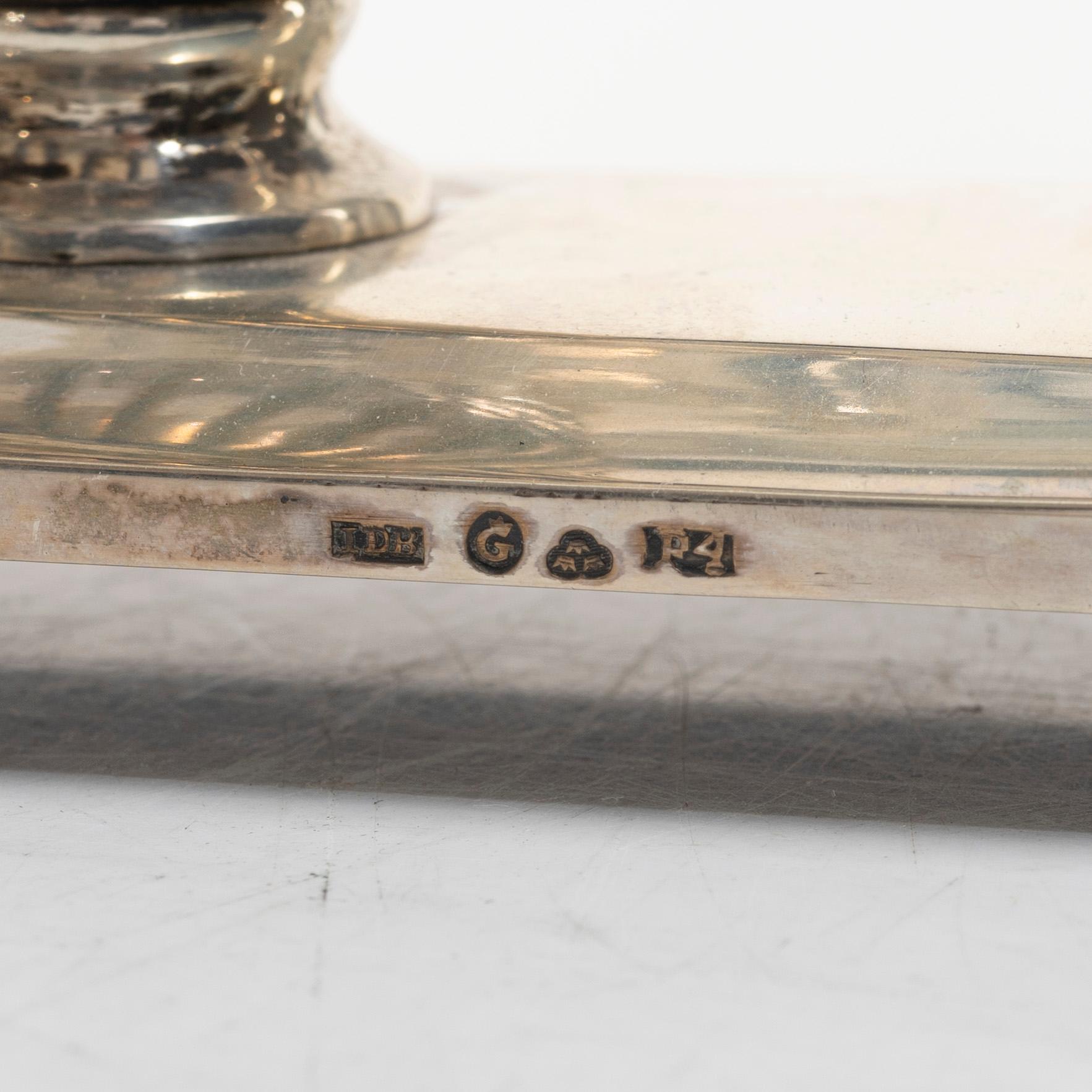
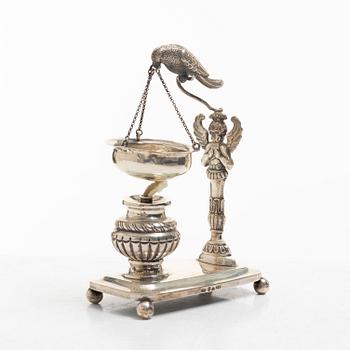
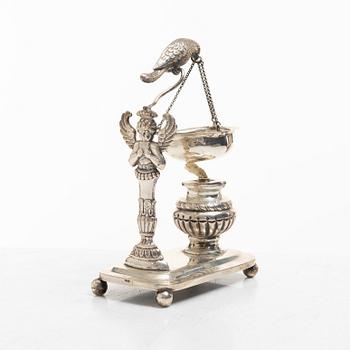
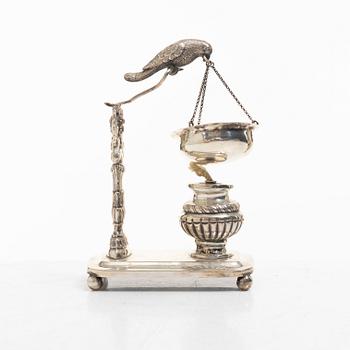
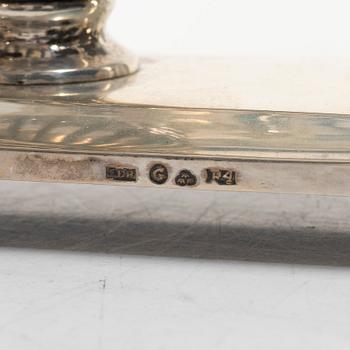
Perfume burner, silver, Johan Daniel Blomsterwall, Gothenburg 1836
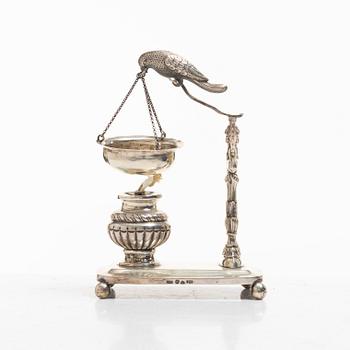
Urn-shaped burner, bowl supported by a bird and a winged figure playing a flute, on a foot with four ball feet. Height 16 cm, weight 122 grams.
Minor wear.
More about Empire
The Empire style lasted roughly between 1810 and 1840 and is primarily considered an interior design style. The style is characterised splendor and pomp and is sometime known as imperial. The French empire is often associated with Napoleon Bonaparte of France who was highly interested in ancient Rome and its attributes. Egyptian elements with sphinxes, palmettes, eagles, griffins, and masks were common as decorative elements. The most common wood was mahogny and burnished gilding was popular. Chiffonier were popular furniture items during the empire and seated durnitres were dressed in light, bright colours. The 1830-40s is known as the Late Empire and was more bourgeois. In Germany and Austria, the style was known as biedermeier and was identified by furniture with softer lined made out of birch. The Empire style came to Sweden with Jean Baptiste Bernadotte (King Karl XIV Johan) afterwhich was known as "Karl Johan". The Swedish style was lighter and less majestic.
Read moreWhat will the transport cost?
Others have also viewed