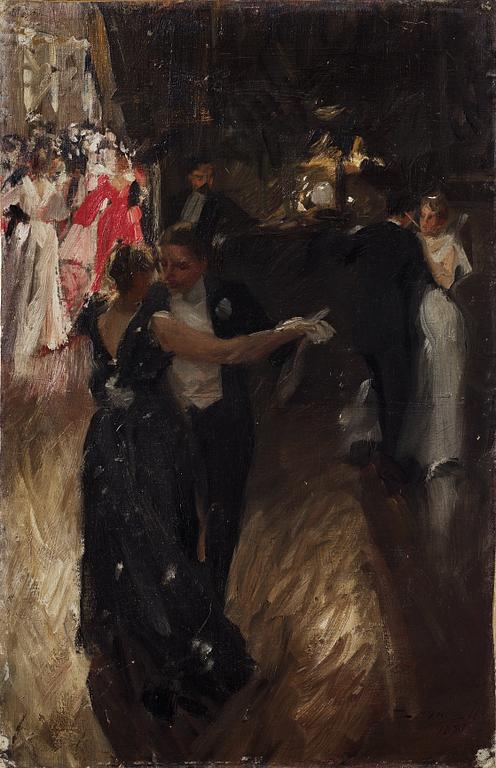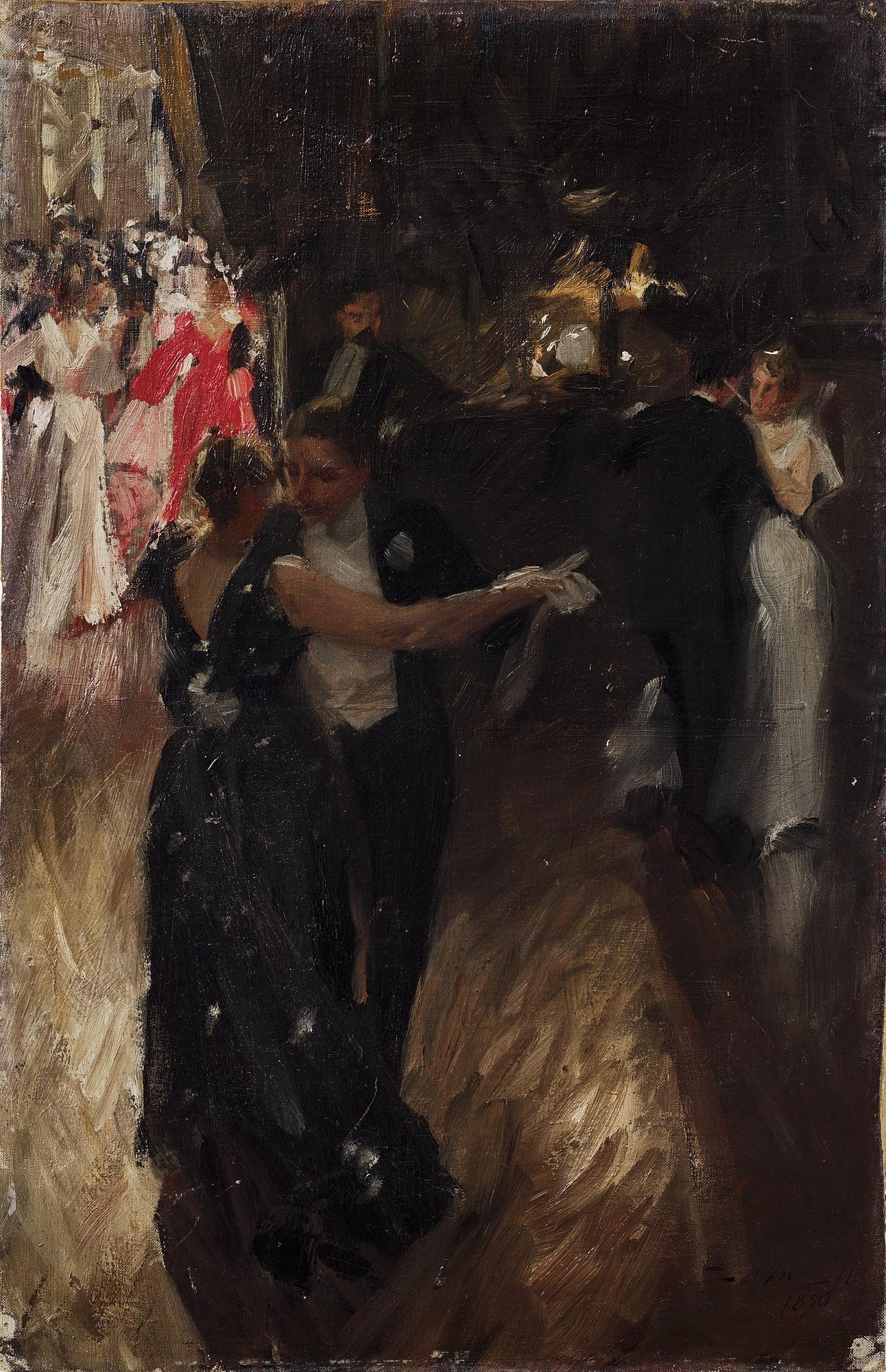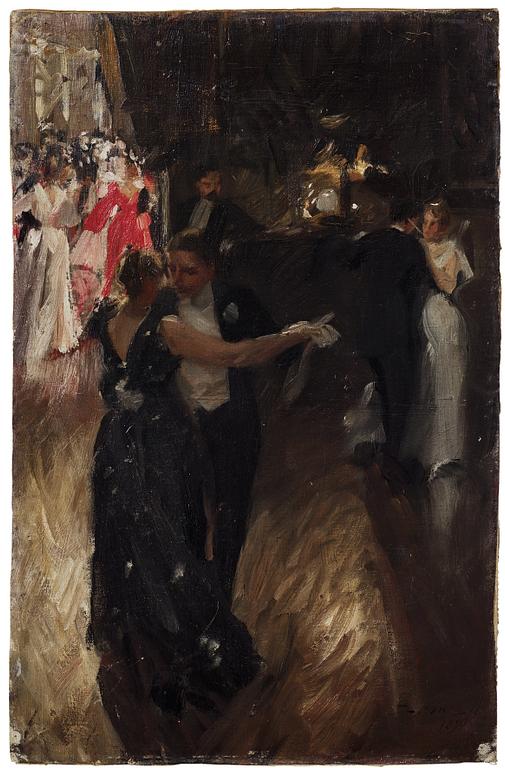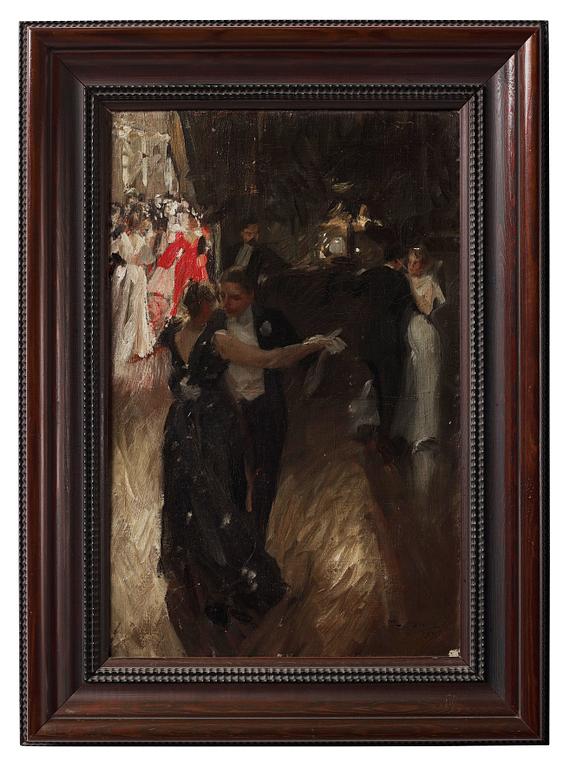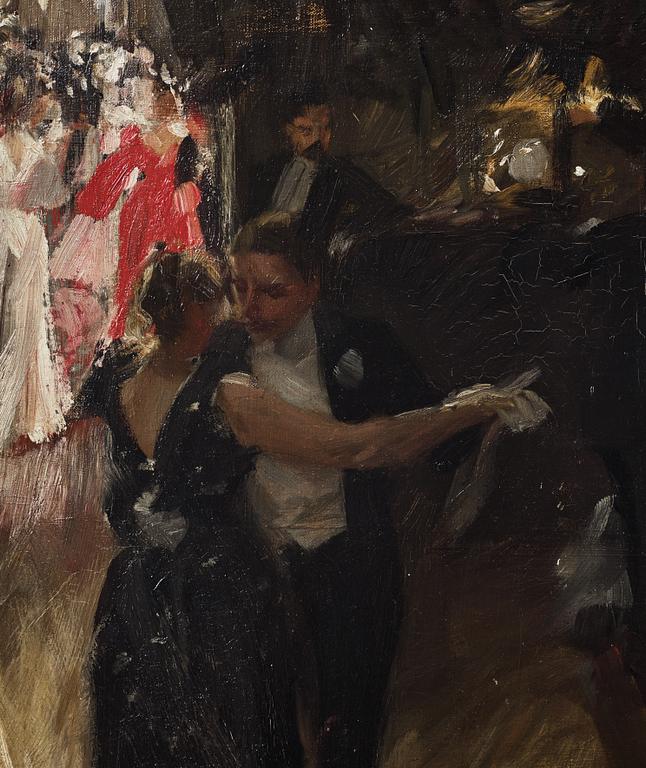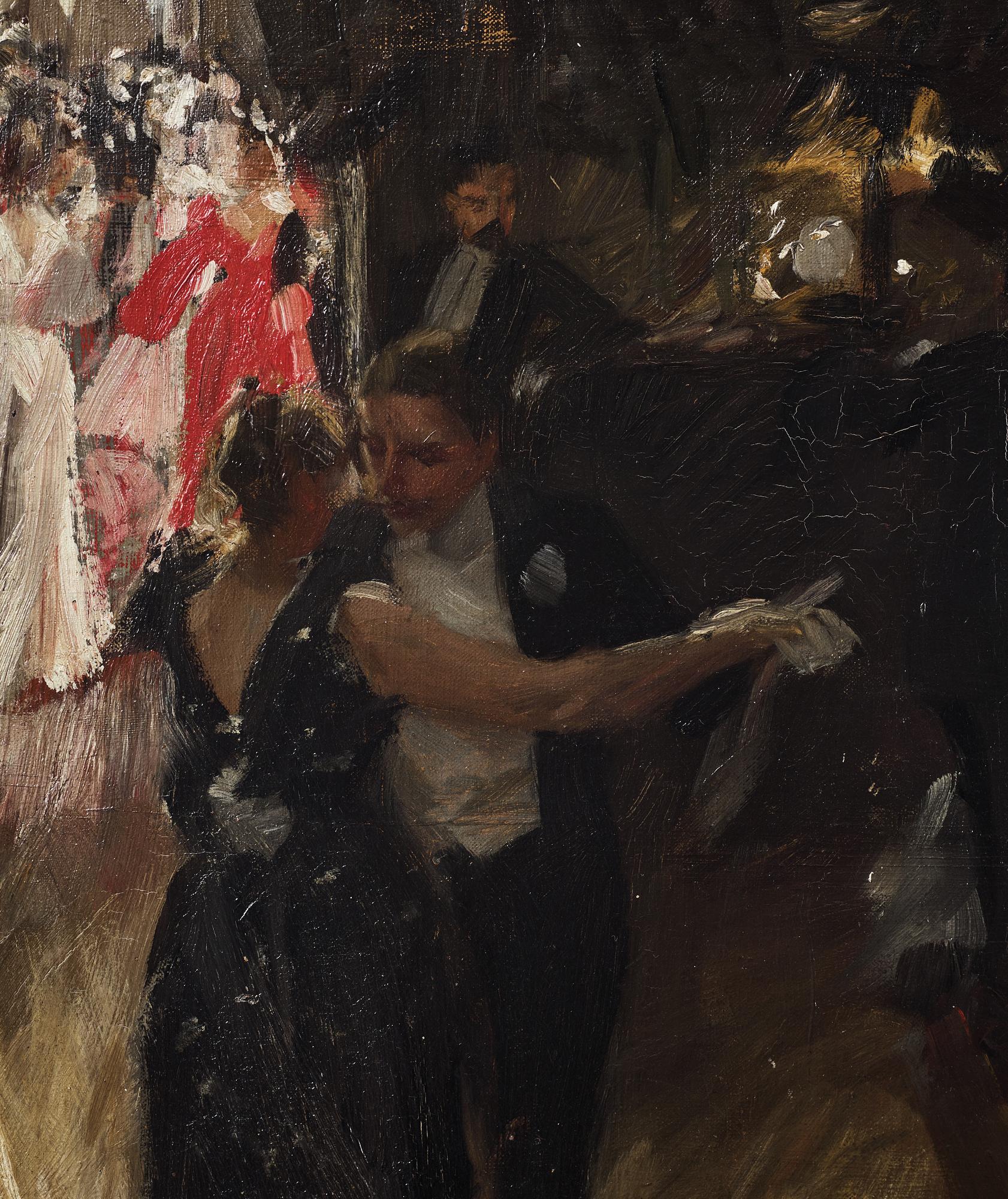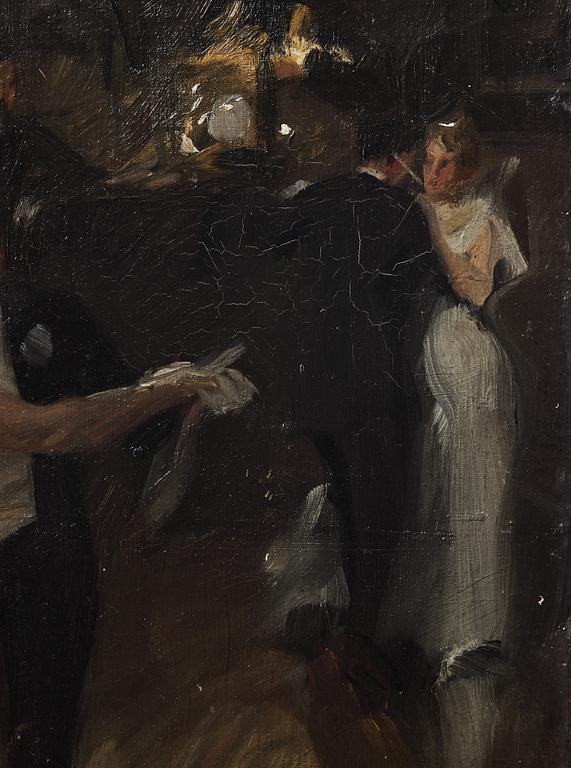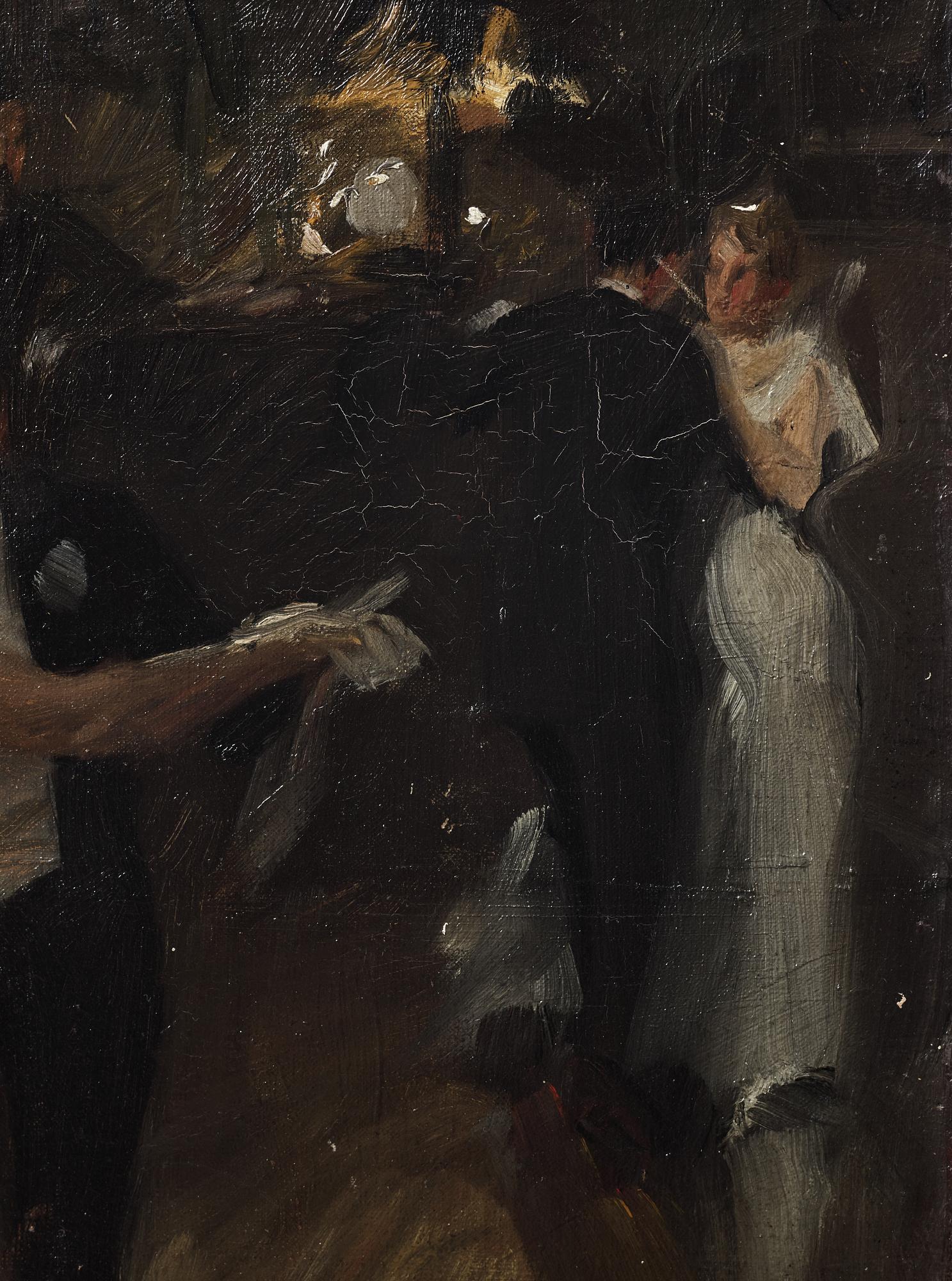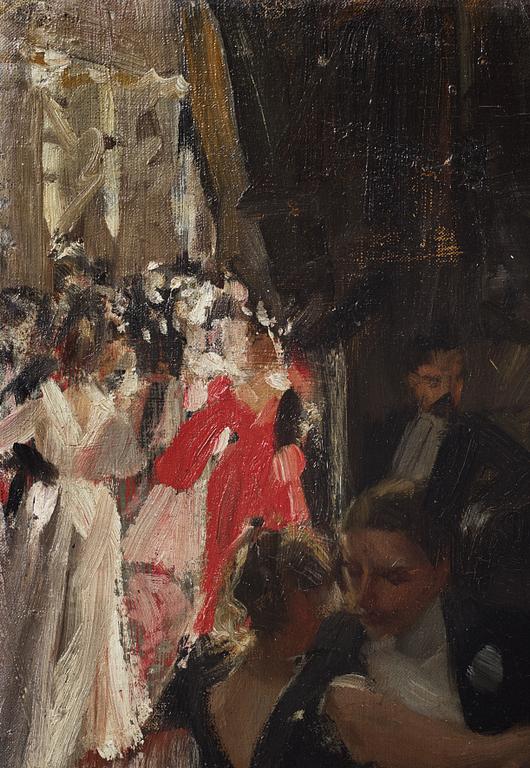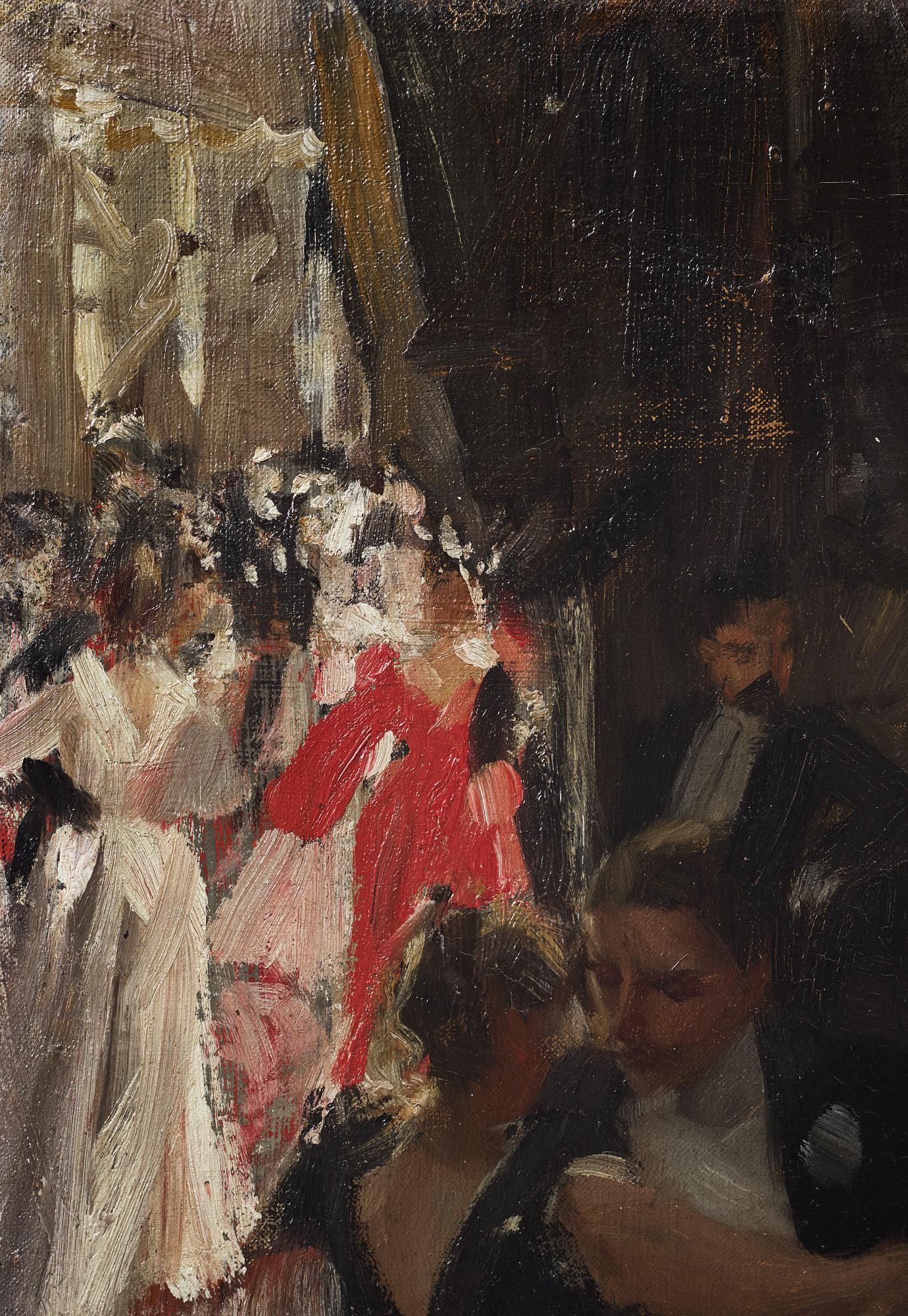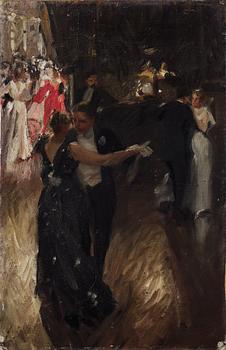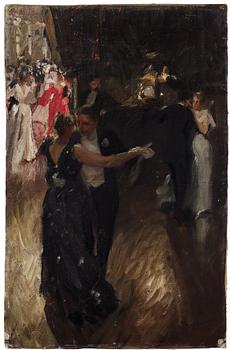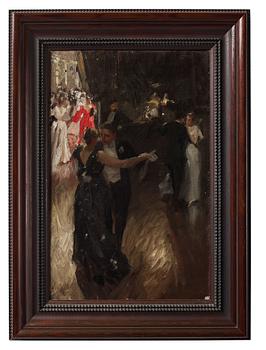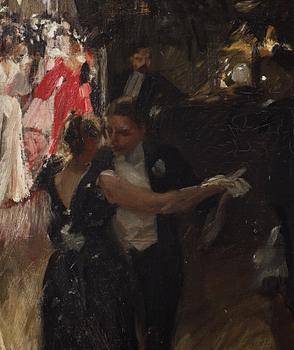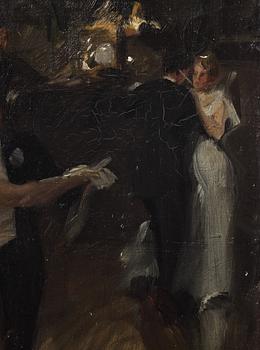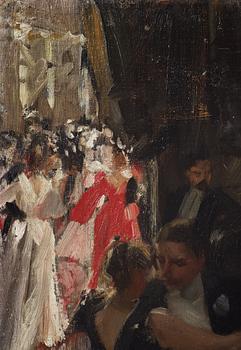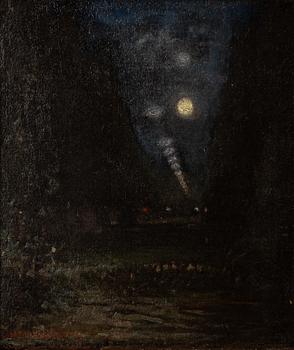
"Valsen" ("The Waltz")
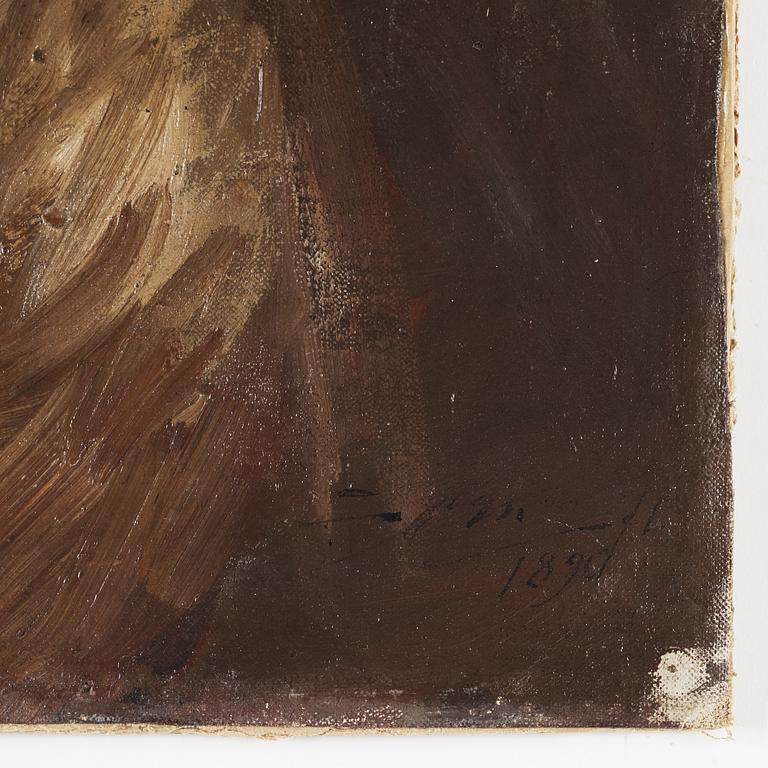
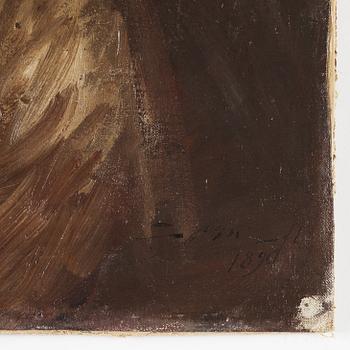
Signed and dated Zorn ft. [fecit] 1890. Oil on canvas laid down on paper-panel 53 x 34 cm.
Provenance
Count Louis Sparre (1863-1964, as a gift directly from the artist); private collection.
Exhibitions
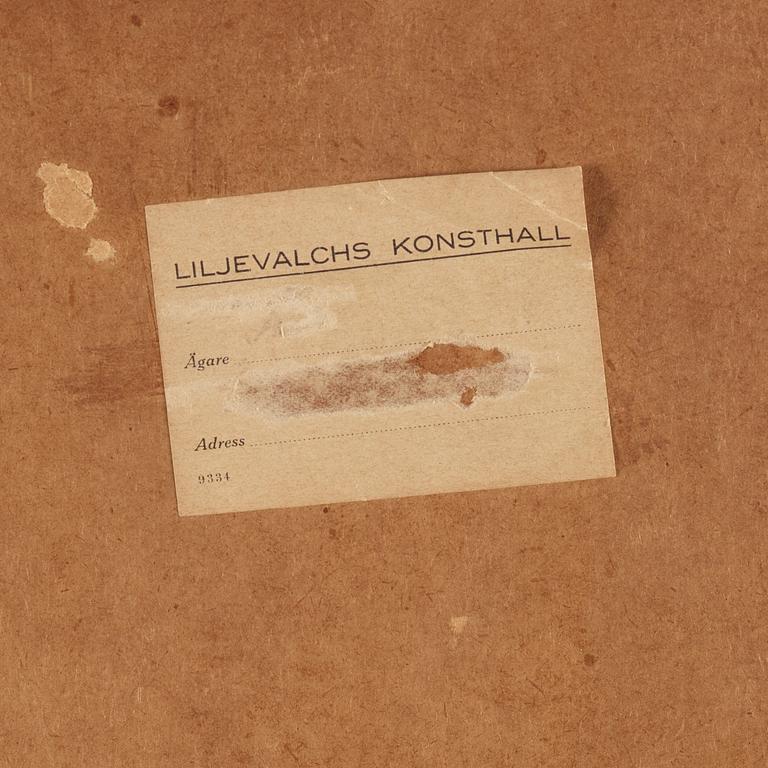
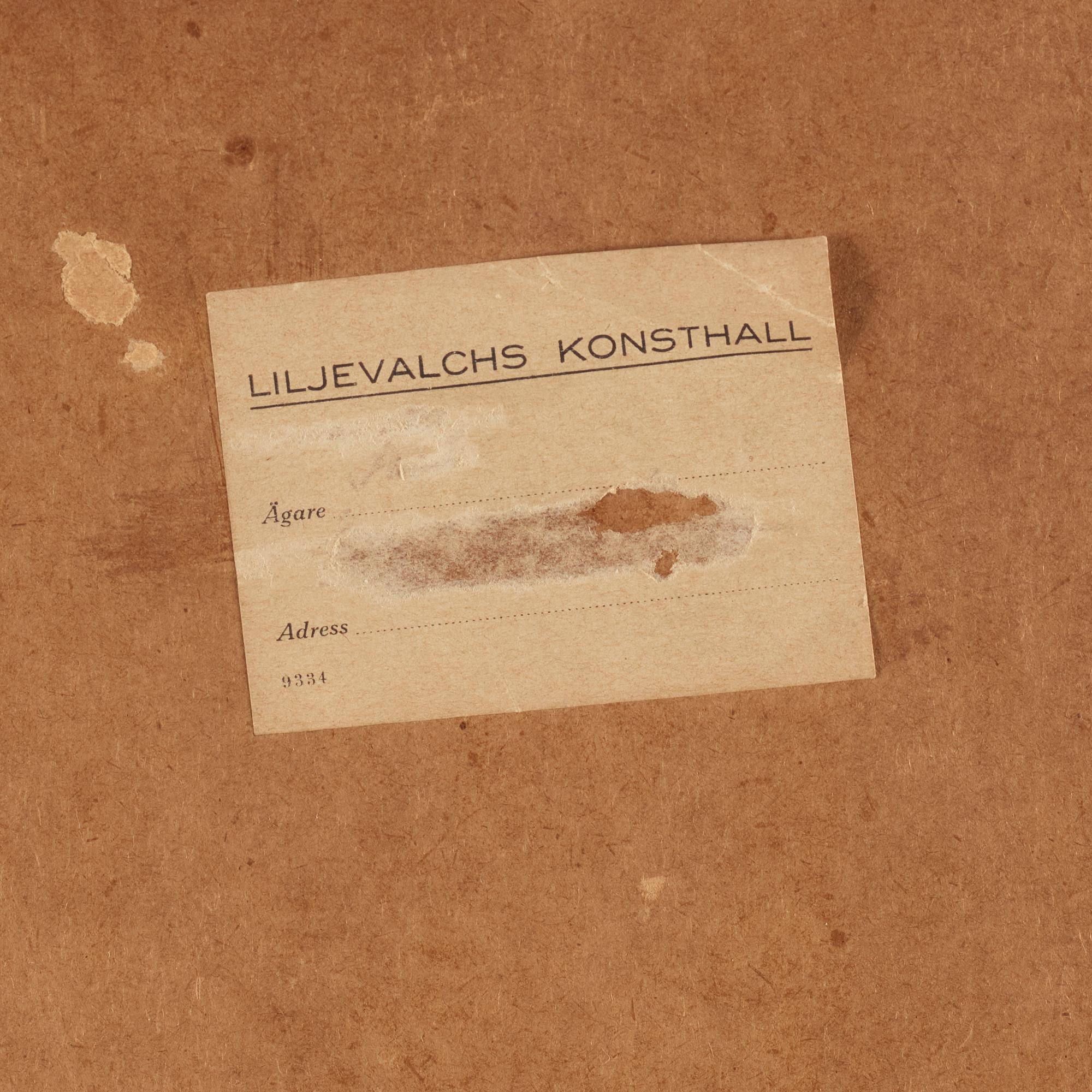
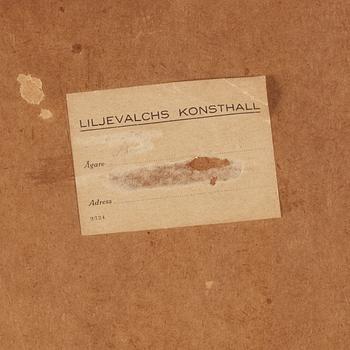
Liljevalchs Konsthall (Liljevalchs Public Art Gallery), Stockholm, "Anders Zorn. Minnesutställning", March 1 - April 6, 1924, no. 54; Ateneum - Finnish National Gallery, Helsinki, "Anders Zorn. Minnesutställning", 1924, no. 13.
Literature
'Konstnärsparet Louis och Eva Sparres bostad', article in (Ed.) Albin Roosval, "Svenska hem i ord och bilder", 1913, mentioned p. 279 ("Zorns sällsynta skiss till den bekanta målningen hos Vanderbilt") and illustrated in interior photo from the study p. 281; Tor Hedberg, "Anders Zorn. Ungdomstiden. 1860-1893", SAK, 1923, mentioned p. 150 and illustrated p. 151; Gerda Boëthius, "ZORN. Tecknaren. Målaren. Etsaren. Skulptören", 1949, mentioned p. 288 and listed in the catalogue under 1891, p. 545: "Studie till do Valsen O s. 288 (Greve Louis Sparre, Stockholm)"; Anders Zorn, "Självbiografiska anteckningar" (edited by Hans Henrik Brummer), 1982, mentioned under "Noter och kommentarer", p. 195; Märta Ramsten and Gunnar Ternhag, "Anders Zorn och musiken", 2006, illustrated full page in colour, p. 64.
More information
.
More about Anders Zorn
Anders Zorn, born in Mora in 1860, showed artistic talent from a young age. In 1875, he traveled to Stockholm and became a student at the then Slöjdskolan (now Tekniska högskolan) in Stockholm, and shortly after, he joined the Royal Academy of Fine Arts. Initially, Zorn had aspirations of becoming a sculptor, but soon watercolor painting took over, becoming his primary medium until 1887. At the student exhibition in 1880, Zorn had his breakthrough with the watercolor painting "I sorg." The following year, he gained international acclaim as a portrait painter. His watercolor painting reached its pinnacle during this period, and his most famous work from this time is "Vårt dagliga bröd” from 1886. Shortly thereafter, Zorn transitioned to oil painting, which was met with immediate success. Zorn's reputation mainly rested on his portrait art, and he portrayed many notable figures, including presidents. For instance, he created an etching of Theodore Roosevelt. His etchings significantly contributed to his success. In the late 1880s, Zorn began working in the genre that would increasingly become his trademark: nude figures in outdoor settings. He had long been fascinated by the movement of water and the reflections of light on its surface. Now, he added the complexity of placing a model near or in the water, aiming to depict a synthesis between nature and humanity. In 1896, Zorn and his wife moved back to Sweden and settled in Zorngården in Mora. This move sparked a renewed interest in his homeland, which would be reflected in his future paintings. Among the artist's scenes from the Mora region, portraying its local customs and ancient traditions, "Midsommardansen" holds the highest value according to Zorn himself. Today, the painting can be found at the National Museum.
Read more